
Childrens Martial Arts
Childrens Martial Arts
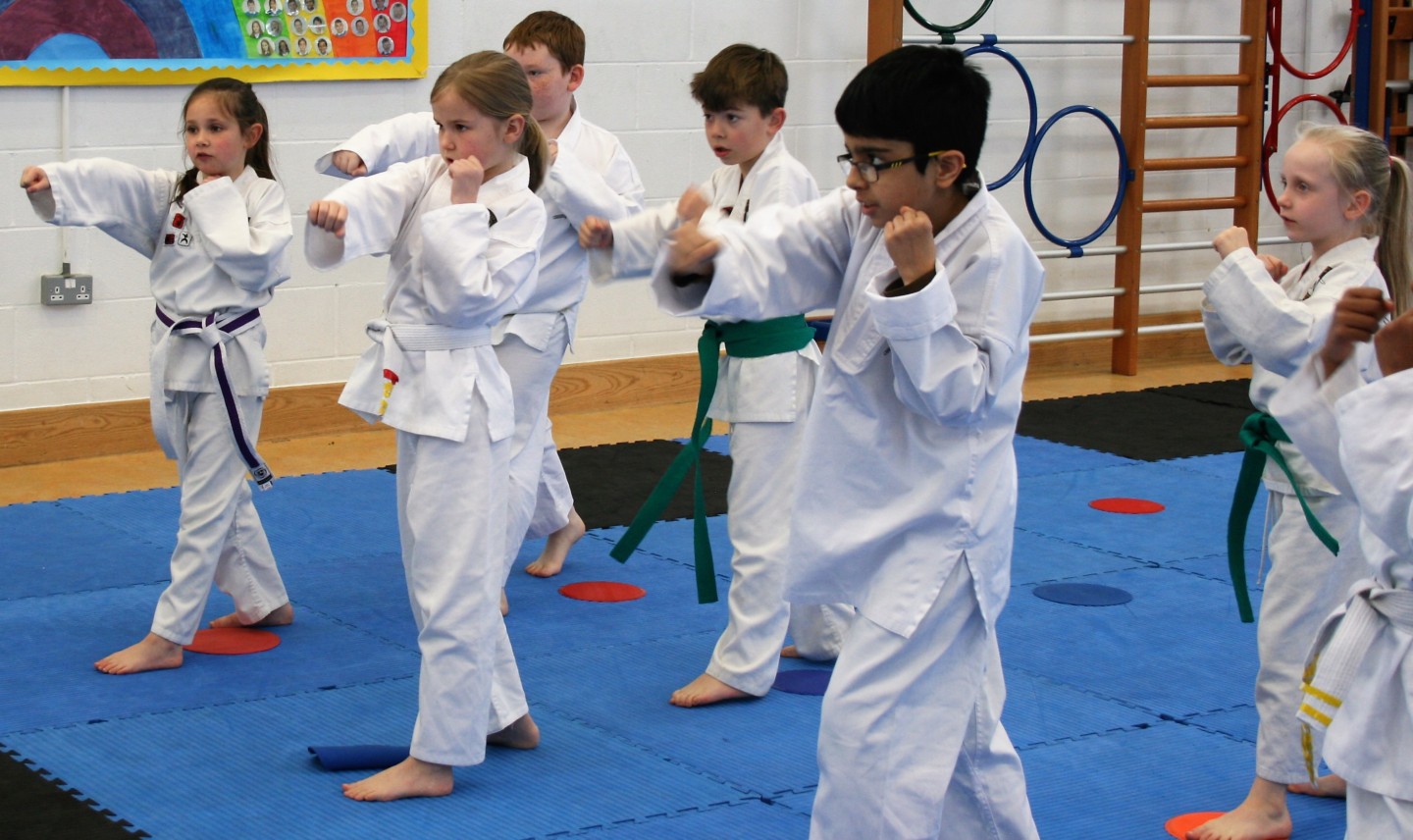
It is our belief that Martial Arts should raise a child’s self-esteem and build character and confidence. In order to achieve these qualities we have developed a training and development program that address the needs of children at different developmental stages of their early lives.

Our training programs are not just about physical skills but perhaps even more importantly promote life and interpersonal skills, as well as traditional Martial Arts values and success. Your child will be exposed to many positive traits and values of Martial Arts:
Self Confidence
With positive guidance young students will find the courage to move outside of their circle of self-doubt. Unlike adults, children with encouragement attempt more difficult Martial Arts moves or skills, without fear of failure. Such a quality is a basis for developing your child’s self-confidence, and encourages them to try new things in the future.
Staying Power
Our students find joy in improving their physical stamina. They can walk farther, run for longer and have the dedication to practice skills until they get them right. In turn, they learn never to give up. They strive harder and longer to reach goals. Even if at first they fail, they persevere. They won’t let self-doubts get in the way of finding ultimate solutions.
Respect
Through the Total Martial Arts method of martial arts instruction, your child will learn to build superior relationships based on trust and mutual respect. “To get respect one must first give respect”
Discipline
Our students learn to develop self-control, self-motivation and perseverance through martial arts discipline.
Goal Setting
One of our sayings is “the goals we set are the goals we get” On the road towards a Black Belt, the Total Martial Arts student gains the experience and motivation for success by earning progressively higher belt ranks. Success is the reward for goal setting.
Self Defence
And of course they will learn effective and powerful self-defence skills, (after all, we are a Martial Arts School), as well as the fundamental attitudes and sense of responsibility appropriate to those tools.

Black Belt Excellence
Our goal for every student is to help them earn their Black Belt not only in martial arts, but in life! By working toward this goal we create an instructional environment in which individual students develop confidence by accomplishing realistic and attainable goals.
The basic attitudes of a successful martial artist, and a successful person, are confidence, respect, discipline, goal setting and effective leadership. The traits and values that our students develop in class will stay with them in later life and improve their abilities and relationships at home and in school.


What you can do when you see others being bullied
What you can do when you see others being bullied
This article is based on some of the mat chats (group discussions) we use in the junior classes at Total Martial Arts Swindon. We aim to give our students the skills and confidence required to stand up to bullying.
If you see someone being teased or bullied, is it ok to join in? Of course not. Joining in will give strength to the bully. Additionally, you will probably feel bad about it later.
If you see someone being teased or bullied, is it ok to stand and watch? No. When you stand and watch, you grant the bully an audience. Bullying isn’t as much fun to do when there is no one watching.
If you see someone being teased or bullied is it ok pretend that you didn’t see anything and go on your way? No. When you look the other way, you empower the bully to continue their behaviour. Once you and your friends decide to not tolerate bullying and take some action, it will occur less frequently.
Next, we will talk about things you should do when you see bullying.
Do you think it is easy to take a stand against bullying? Absolutely not! It takes a lot of courage. That’s why far too few people do it. You see, most children dislike seeing others being bullied, but they are scared to do anything for fear that the bully may turn their attentions on to them or that they might be viewed as a ‘tell-tale’. Remember, there is always something that you can do when you see others being bullied. And if more people would take a stand against bullying, we would see a lot less of it. That’s why we should try to be an Upstander instead of a Bystander. An Upstander takes action against bullying. A Bystander does nothing.
Let’s look at some ways that we can be an Upstander.
1. Get There First
Sometimes we can see a situation developing before it happens. For example, you may notice someone who has been bullied being approached by the bully. When this happens, you can use the “get there first” strategy. Let’s pretend that Jerry is approaching Daniel with the intention of bullying him, but he is still a long way off. You could walk over to Daniel and say, “Hey Daniel, why don’t you come back to the class with me early. I would like your help with a math problem.”
2. Step In and Take Charge.
If you see someone being bullied, one thing you can use is the “Step In and Take Charge” method. Imagine that you see Jerry calling Daniel names in front of a crowd during lunch break. You could walk right up to Jerry and say, “Jerry, you are bullying Daniel by calling him names. Please stop it right now. It’s not very nice and nobody likes it.”
3. Distract and Redirect
If you see someone being bullied and you are not comfortable confronting the bully, you can use the “Distract and Redirect” method. Once again, imagine that you see Jerry calling Daniel names in front of a crowd at lunch. You could walk up to Jerry, pretending like you don’t notice what is going on and say, “hi Jerry, that is a cool shirt.” Then grab Daniel by the arm, start to walk off and say “hey Daniel, come with me. I have something that I want to show you.”
4. Leave and Report
If you see someone being bullied and you are uncomfortable confronting OR interrupting the bully, you can use the “Leave and Report” method. Once again, imagine that you see Jerry calling Daniel names in front of a crowd at lunch. You can leave the scene immediately and report it to someone who has the authority to do something about it. “Mrs. Jones, Barry is bullying Johnny in the hall way. Please can you stop him?”
It is important to understand that you are NOT a tell-tale if you ask for help. Reporting is when you let someone who can help you know that you (or another person) are being treated in a disrespectful manner. Ask an adult for help. Tell them what is happening. No one should have to put up with bullying. Reaching out for help will take the bully’s power away.
Let’s review the four ways to be an Upstander.
They are:
1. Get There First
2. Step in and Take Charge
3. Distract and Redirect
4. Leave and Report
Success tips for parents to help their child at school
Success tips for parents to help their child at school
Our junior programs emphasize key attributes like perseverance, goal achievement, self discipline along with focus. These are the same attributes that children need to develop to start, stick with and then finish their homework.
Total Martial Arts Swindon has a long and successful record of encouraging students towards achieving high grades at school. By working as a team with parents, we can help to overcome any challenges our students face at school.
Here are some suggestions for helping you and your child establish habits that will help them to achieve success at school.
Establish and write out a daily routine
Discuss and agree a routine with your child for school days. Put the list somewhere where you can both refer to it, such as on the fridge. Agree a time to get up, leave for school, do homework , go to bed and how long for fun/relaxing.
Establish a morning routine
Make sure your child starts the day with a healthy breakfast to fuel the body and brain for the day ahead.
Promote a good attitude
Remind your child to go to school each day ready to focus, work hard and have fun learning.
Promote good homework habits
Have a set time and a quiet place for homework. Encourage a thorough job and for them to hand it in on time. A lot of homework can make your child feel like giving up coming to martial arts class. Don’t forget that the focus, self-discipline and perseverance that we teach at TMA will help them to do better at school. Academic studies show that children who exercise regularly do better in a range of memory and number tests.
Communicate with the teachers
Teachers are smart but cannot read minds. Great relationships and success comes from great communication. Share concerns with your child’s teachers.
Create a reward scheme
Using a visual chart, consider a long-term reward scheme to help encourage good school habits such as homework completion, report improvement etc.
Share an interest
Talk to your child about what they learned at school today. Ask them what they enjoy and compliment them on their achievements. Give them your full attention and be interested.
Encourage positive relationships
Be highly supportive of your child’s friendships with others with good character and good habits. Gently and with subtlety discourage relationships with kids who may be a negative influence. Be careful not to cause them to rebel.
Establish a bedtime routine
Get into the habit of finishing the day with low energy activities like reading and have your child go to bed at the same time each night. If this routine becomes a habit then your child will get enough sleep for the school day ahead and this will become automatic.

How much physical activity do children need to keep healthy?
How much physical activity do children need to keep healthy?
According to the latest National Health Service recommendations to stay healthy or to improve health, children and young people need to do three types of physical activity each week: aerobic, muscle-strengthening and bone-strengthening activity.
To maintain a basic level of health, children and young people aged five and above need to do:
At least 60 minutes (1 hour) of physical activity every day, which should include
- moderate-intensity activity, such as cycling and playground activities
- Vigorous-intensity activity, such as fast running and tennis.
On three days a week, these activities should involve
- muscle-strengthening activities, such as push-ups or other bodyweight exercises
- Bone-strengthening activities, such as running.
The children’s martial arts program at Total Martial Arts Swindon is designed to include all the various types of exercise required to keep children healthy as well as encouraging an active and health lifestyle.

How to encourage children to do more moderate-intensity activity:
Don’t sit for too long
Children and young people should minimise the amount of time they spend sitting watching TV, playing computer games, and travelling by car when they could walk or cycle instead.
Make exercise fun
- walking to school
- playing in the playground
- skateboarding
- rollerblading
- walking the dog
- riding a bike
Moderate-intensity aerobic activity means you’re working hard enough to raise your heart rate and break a sweat. One way to tell if you’re working at a moderate intensity is if you can still talk but you can’t sing the words to a song.
What counts as vigorous-intensity activity?
Examples of activities that require vigorous effort for most young people include:
- playing chase
- energetic dancing
- aerobics
- running
- gymnastics
- playing football
- martial arts, such as karate
- riding a bike fast or on hilly ground
Vigorous-intensity aerobic activity means you’re breathing hard and fast, and your heart rate has gone up quite a bit. If you’re working at this level, you won’t be able to say more than a few words without pausing for a breath.
What counts as muscle-strengthening activity?
For young people, muscle-strengthening activities are those that require them to lift their own body weight or to work against a resistance, such as climbing a rope.
Examples of muscle-strengthening activities suitable for children include:
- games such as tug of war
- swinging on playground equipment bars
- gymnastics
- rope or tree climbing
- sit-ups
What counts as bone-strengthening activity?
Bone-strengthening activities produce an impact or tension force on the bones that promotes bone growth and strength.
Examples of bone-strengthening activities suitable for children include:
- activities that require children to lift their body weight or to work against a resistance
- jumping and climbing activities, combined with the use of playground equipment and toys
- games such as hopscotch
- skipping with a rope
- walking
- running
- martial arts
Give Children the Confidence to Stand up To Bullies
Give Children the Confidence to Stand up To Bullies
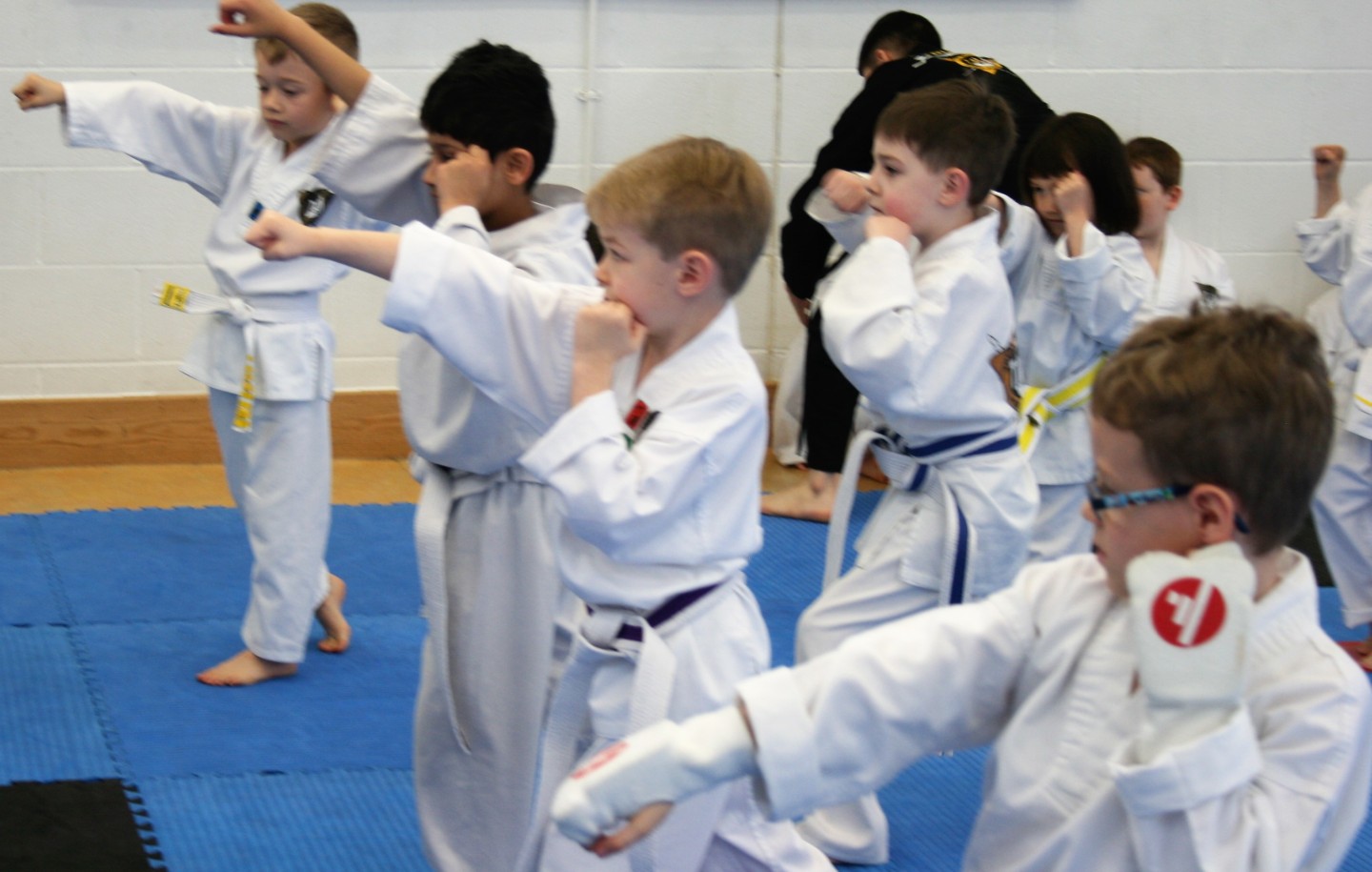
One of the primary benefits that children gain from training in the martial arts is increased confidence. This increased confidence can manifest in a variety of ways such as better social interaction, more willingness to participate in group discussions or answer questions at school. Another benefit is that those who display confidence are less likely to be targeted by bullies because bullies always look for a victim who is an easy target.

We are pleased to report that one of our Young Dragons students Callum showed great courage when he stood up to a bully who was targeting one of his friends. Callum’s Parents Richard and Jasmin Heathcote (who also train with TMA) were very proud of their son when they told us about what he had done. Callum received an award in class for his courage.


The true secret to building confidence in kids
The true secret to building confidence in kids
The call no parent wants to get!


Simple but Important


Guilty as charged...
Guilty as charged…

For Your Child’s Health…
For Your Child’s Health…
