
In the world of martial arts, most people immediately think of striking, grappling, and self-defence techniques. However, one aspect that often gets overlooked is communication — specifically, the skill of verbal judo.
At Total Martial Arts, we firmly believe that mastering verbal judo is just as essential as any physical skill taught in our classes. In this blog post, we’ll explore what verbal judo is, why it’s crucial for children and young adults, and how it can empower them in everyday situations.
 What is Verbal Judo?
Verbal judo is a term coined by Dr. George J. Thompson, a former law enforcement officer and martial artist, who developed techniques to de-escalate potentially violent confrontations through the art of effective communication. The underlying premise is that words can be powerful tools, just as martial arts techniques can be.
Verbal judo focuses on maintaining control of a conversation and diffusing tense situations by employing empathy, patience, and strategic language. Rather than resorting to physical confrontation, this approach fosters understanding and dialogue, making it a valuable skill in both personal and professional settings.
Why is Verbal Judo Essential?
- Conflict Resolution
As children and teenagers navigate their social environments, they inevitably encounter conflicts, whether it be disagreements with peers or misunderstandings with adults. Verbal judo equips them with the skills needed to approach these situations constructively. Instead of escalating tensions, children learn to communicate their feelings and intentions effectively, facilitating resolution without resorting to aggression.
Example: In a playground disagreement over a toy, a child trained in verbal judo might say, “I see you’re upset because you want to play with that. Let’s take turns,” instead of shouting or shoving.
- Emotional Regulation
Teaching children the art of carrying a conversation helps them develop emotional intelligence. Understanding how to phrase their thoughts clearly and positively, they become better at expressing their feelings, which assists in regulating their emotional responses. When children can articulate their emotions rather than acting on them, they are less likely to find themselves in volatile situations.
- Building Self-Confidence
Learning the skill of verbal judo can significantly boost a child’s self-esteem. When they know they can handle difficult conversations appropriately, they become more confident in their social interactions. This confidence transfers to other aspects of their lives, from academic settings to friendships.
Example: A child who can calmly respond to a challenging question from a teacher or effectively state their opinion in a group discussion will likely feel more at ease and secure in their abilities.
- Developing Empathy and Listening Skills
Verbal judo places a strong emphasis on active listening, an essential component for any meaningful interaction. By learning to listen fully before responding, children develop empathy and understanding towards others, making them more skilled communicators. This skill set is increasingly vital in today’s world, where emotional awareness plays a crucial role in interpersonal relationships, whether at home, school, or beyond.
- De-Escalation Techniques
In physical confrontations, understanding how to use words to defuse a situation can be a life-saving skill. Teach children how to recognise rising tensions and provide them with tools to address them verbally. This could mean using humour, acknowledging someone’s feelings, or simply adopting a calm and neutral tone of voice.
Example: In a situation where someone is agitated, a child could say, “I can see that you’re really passionate about this. Let’s talk about what we can do to work this out.”
 How Does Verbal Judo Complement Physical Martial Arts Training?
- A Comprehensive Skillset
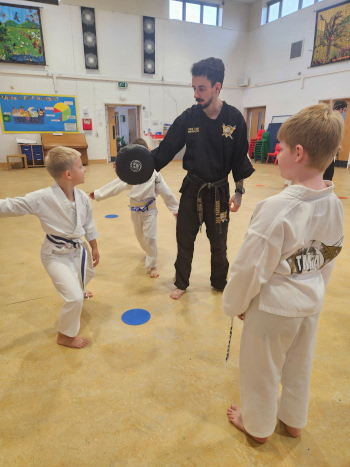
At Total Martial Arts, our philosophy is rooted in the idea that effective martial artists are well-balanced individuals. The integration of verbal judo with physical training creates a comprehensive skill set. While physical techniques are crucial for self-defence, the ability to handle conflict verbally empowers children in all areas of life.
- Enhancing Situational Awareness
Engaging in both verbal and physical training improves a child’s situational awareness. They learn to assess their environment, recognise potential conflicts, and use the appropriate responses. By cultivating this awareness, children can de-escalate scenarios before they evolve into physical altercations.
- Confidence in All Aspects of Life
When children learn to combine physical techniques with effective communication, they develop confidence not only in self-defence but also in various social settings. They become not just better martial artists, but also better friends, family members, and community members.
- Reinforcing Values of Respect and Integrity
Martial arts training places a strong emphasis on respect and integrity. By teaching verbal judo alongside physical techniques, children learn to honour these values in their interactions. Communication becomes a means of building bridges and resolving conflicts rather than a tool for bullying or intimidation.
 Practical Exercises for Verbal Judo
Integrating verbal judo into martial arts training or everyday life can be done through various exercises:
- Role Play Scenarios
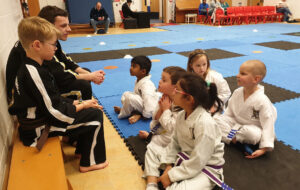
We encourage role-playing exercises where children can practice conflict situations. Pair them up and have them take turns using verbal judo techniques to navigate these challenges. This could include dealing with peer pressure, resolving disputes, or responding to criticism.
- Reflection and Discussion
After a class or a particularly challenging day, we have a reflective discussion. Encourage children to share what made them frustrated and how they might respond better in the future. This opens the floor for learning and growth while emphasising the importance of verbal skills.
- Storytelling and Active Listening Games
We engage children in storytelling sessions where they must pay attention to details and respond thoughtfully to questions. This encourages active listening skills and helps them practice speaking clearly and with intent.
Conclusion
Incorporating verbal judo into martial arts training is essential for fostering well-rounded individuals. At Total Martial Arts, we are committed to providing our students with the tools they need to navigate conflicts effectively and confidently, ensuring they are not only capable fighters but also outstanding communicators.
By focusing on verbal judo skills, we equip children and teenagers with the ability to face life’s challenges with poise and wisdom. If you’re a parent in the UK and are looking to enrich your child’s martial arts experience, we invite you to join us at Total Martial Arts. Together, we can empower the next generation to thrive in every aspect of life.
For more information, get in touch and discover how our unique training can provide your child with invaluable skills for both the dojo and life beyond.