
In today’s blog post we explore how martial arts improves mental health in children.
Now, more than ever, children are facing increasing levels of stress and anxiety.
As we search for ways to help children navigate these challenges, the benefits of martial arts in improving mental health have become more apparent.
From building confidence and self-esteem to fostering discipline and focus, martial arts offer a holistic approach to mental well-being for children.
In this blog post, we will explore the hidden benefits of how martial arts improves mental health in children.
Building Confidence and Self-Esteem Through Mastery
Martial arts serve as a powerful avenue for bolstering confidence and nurturing self-esteem in children, primarily through the lens of mastery.
The journey within martial arts is marked by clear milestones – the attainment of new belts or levels – each representing a step forward in a child’s personal development. This structured progression allows children to witness their own growth and capabilities first-hand, instilling in them a real sense of accomplishment.
Such achievements are not merely badges of honour but are reflective of the dedication, effort, and resilience poured into their training.
Engaging in this process of setting, pursuing, and achieving goals, children internalise a mindset of perseverance and self-belief.
This belief in their own potential and the tangible evidence of their progress work in tandem to elevate their self-esteem.
Beyond the martial arts school, these newfound levels of confidence empower children to face life’s myriad of challenges with a real sense of self-assuredness, positively influencing their mental health.
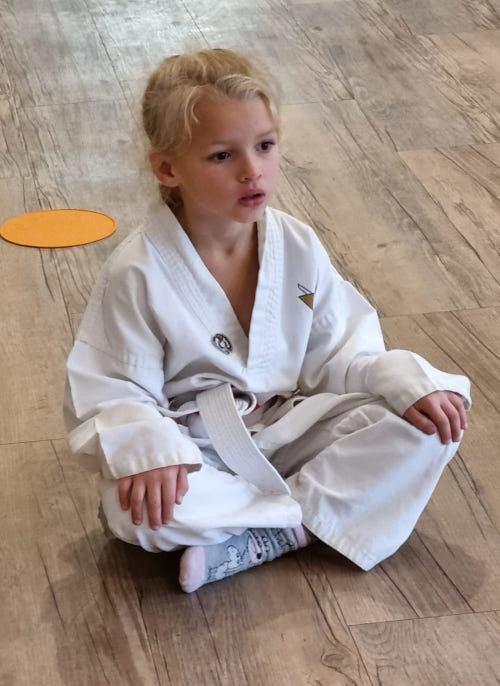 Fostering Discipline and Focus Amidst Distractions
In an era where digital distractions are found everywhere, maintaining concentration and discipline has emerged as a formidable challenge for children.
Martial arts offer a sanctuary where these essential life skills are nurtured. The rigorous training and the ethos of martial arts instil a sense of order and self-control, crucial for personal development.
As children engage in this disciplined practice, they learn the value of commitment and the importance of focusing their attention on the task at hand. This structured environment not only enhances their capacity to concentrate but also teaches them how to apply these principles to other aspects of their lives.
The skills of discipline and focus acquired through martial arts training become invaluable tools, enabling children to navigate through their academic and personal endeavours with greater ease and success.
By learning to master their minds and bodies, children equip themselves with the resilience to withstand the distractions of the modern world, fostering a healthier mental state.
The Role of Martial Arts in Stress Reduction and Anxiety Management
Martial arts provide a multifaceted approach to managing stress and anxiety in children, acting as both a physical outlet and a mental discipline.
The rigorous physical exertion in martial arts training allows for the release of endorphins, the body’s natural mood lifters, which play a crucial role in stress alleviation. Moreover, the discipline required to master the various techniques promotes a state of mental focus and clarity, providing a break from the incessant worries that can occupy young minds.
This dual benefit helps children to not only expel physical tension but also to attain a calmer and more composed state of mind. Through regular practice, they develop the ability to centre themselves, a skill that proves invaluable in managing anxiety levels and navigating the pressures of daily life with greater serenity.
The practice of martial arts, therefore, stands as a valuable tool in the enhancement of emotional and psychological resilience among children, offering a pathway to a more balanced and stress-free life.
Social Skill: The Community Aspect of Martial Arts
Martial arts classes offer far more than just physical training.
They are in fact a breeding ground for developing essential social skills and fostering a sense of camaraderie amongst participants. It’s a place where children learn to interact positively with one another, engaging in practices that emphasise respect, patience, and encouragement.
Through regular interaction with peers and instructors within this structured environment, children are presented with opportunities to develop their communication and interpersonal skills. These experiences are instrumental in teaching young learners how to work effectively in teams, resolve conflicts amicably, and support their peers in achieving mutual goals.
These skills are crucial in bolstering a child’s emotional intelligence and empathy, qualities that are invaluable in navigating the complexities of social interactions both within and outside the martial arts school.
Additionally, the inclusive atmosphere of martial arts classes ensures that every child, regardless of their background or abilities, is given the chance to feel part of a community. This inclusivity not only enriches their social experiences but also aids in diminishing any feelings of isolation they might experience elsewhere.
Engaging in martial arts opens doors to lasting friendships and meaningful mentorships, laying a foundation for healthier social development and mental well-being.
The Empowerment of Self-Defence Skills
The acquisition of self-defence skills through martial arts is more than just a physical safeguard; it instils a deep-seated sense of empowerment in children.
By mastering techniques designed to protect themselves, they gain an invaluable layer of self-assurance and newfound confidence.
The psychological benefit of knowing they possess the ability to stand their ground in threatening situations cannot be overstated.
It contributes significantly to a reduction in feelings of helplessness or fear, which are common triggers for anxiety among young individuals. Furthermore, the disciplined environment in which these skills are learnt reinforces the importance of responsibility, judgement, and restraint.
Children learn not only the mechanics of self-defence but also the ethical considerations surrounding their use, promoting a balanced understanding of power and its consequences.
This holistic approach to self-defence training ensures that children are equipped not just with the means to protect themselves but also with the wisdom to use these skills with good sense.
As a result, the mental well-being of children is greatly enhanced by the assurance of their ability to defend themselves and the ethical maturity to navigate complex social situations.
So, based on all of this, it’s easy to see how martial arts improves mental health in children.
Total Martial Arts Premier Academy has been a centre of excellence for over a decade.
We deliver our program to hundreds of children, including skills that cover ‘stranger danger’ and anti-bullying, confidence and respect building, and fitness and flexibility.
We help children to develop, achieve goals and reach their maximum potential.
Get in touch to book your kids trial today: 07765 202363
This month we’ve been focusing our blog posts on our younger members – see them here:
Why the Importance of Exercise for Children Can’t Be Ignored