
Do you think one of these?
Do you think one of these?
I mean, I don’t know if I’d last 10 minutes…”


The call no parent wants to get!

Strength and Conditioning for Martial Arts
Strength and Conditioning for Martial Arts
Strength and Conditioning for Martial Arts
Strength and conditioning for martial arts can be tricky occasionally. There are an overwhelming amount of choices and limited time in which to train.
Should I use kettlebells?
Or should I focus more on Olympic lifts? What about body weight circuits?
Should I be doing interval sprints or are long distance runs better?
Is Crossfit a good form of strength and conditioning?
What if I did plyometrics?

Starting to see what we mean?
Fortunately for you at Total Martial Arts Swindon we have a great deal of knowledge of and experience with improving fitness and performance. We would like to provide you with a strength and conditioning routine that you can follow along with throughout the next few months.
For this routine we will be focusing on one main area of fitness – strength.
Its most efficient in the long term to first develop a good foundation of strength before moving on to the other phases of power and speed.
Pre-Workout Notes
Before starting these workouts there are a few things to consider.
Consistency is the key. The best fitness routine is the one you do every week. Examine your schedule and select times that you will be able to use for exercise every week. You will get results by exercising 2-4 times per week with each session lasting 1 hour.
Make sure you DO NOT RUSH your warmup (or any aspect of your training) doing so can lead to injuries
Take 5 minutes to do some stretching after your exercise to increase flexibility
Strength Phase
With strength being the main focus here, the rep range will be between 3-5. The key is to make sure that the weight is difficult enough where you can only just do 5 reps while keeping good form.
Take a relatively long break between sets of around 3-5 minutes to allow your muscles and central nervous system to recover and thus be able to deliver maximum strength in the next set. Shadowboxing during this rest time will help to develop skills and stop you getting bored.
Strength Phase – Workout #1
Legs
Squat – 3 sets / 3-5 reps max
Lunges – 3 sets / 3-5 reps max (each side)
Upper Body Pull
1-Legged Deadlift – 3 sets / 3-5 reps max (each side)
Weighted Pull-ups – 3 sets / 3-5 reps max
Upper Body Push
1-Arm Chest Press – 3 sets / 3-5 reps max (each side)
Weighted Dips – 3 sets / 3-5 reps max
Core
Rocky Abs – 3 sets / 3-5 reps max
Cardio – 15 minutes steady pace jogging/ skipping
Cool down – Light stretch, foam roller
Strength Phase – Workout #2
Legs
Single leg Squat – 3 sets / 3-5 reps max
Leg Press – 3 sets / 3-5 reps max
Upper Body Pull
1-Arm Row – 3 sets / 3-5 reps max
Weighted Chin-ups – 3 sets / 3-5 reps max
Upper Body Push
1-Arm Shoulder Press – 3 sets / 3-5 reps max
1-Arm Pushups – 3 sets / 3-5 reps max
Core
Ab rollout – 3 sets / 3-5 reps max
Cardio – 15 minutes steady pace jogging/skipping
Cool down – Light stretch, foam roller
One Arm/One Leg Exercises
You will notice that many of these exercises are unilateral (using 1 arm or 1 leg) this is specific to martial arts where we kick and punch with 1 leg or 1 arm at a time and operate from staggered stances.
Final Thoughts
This routine will give you a specific focus for your training and allow you to see progress.

Simple but Important


Meditation: building the power you did not know you had
Meditation: building the power you did not know you had
Perhaps you go about your life just like everyone else – school, a job, and the regular habits and cycles that come along with it. But what you don’t know is that there is something missing in life, an undeveloped potential that’s actually inside of you – something waiting to be awakened.
And then one day everything changes.
Meditation.
Meditation is training your mind to achieve self-control, focus and the ability to alter your mind to meet the challenges of any situation and conquer the day.
The Problem
When we are on our regular commute and someone is impolite or obstructive, we get angry. We don’t seem to have a choice in the matter – we just GET ANGRY. When a friend says something stupid, or something wonderfully intelligent, we react. There is no deliberation, to decide how you should feel and respond. This shows a lack of self-control where one is dominated by emotions.
Meditation: The Science
Meditation is simply the practice of learning how to pay attention. It’s not something magic. Its backed up by thousands of years of tradition as well as modern scientific research.
Meditation is supported by a huge body of scientific research, and has been shown to help manage symptoms and reduce risks for a wide variety of conditions, including:
- Anxiety disorders,
- Asthma
- Blood pressure
- Cancers
- Depression
- Heart disease
- Pain
- Sleep issues
- Stress
- Low confidence
- obesity
It’s not isn’t a panacea, but hits the bad stuff pretty darn far and wide. At the end of the day, our goal here is to give you the tools to live healthy and happy life. And it turns out, at any given time almost half of us are lost in thought unrelated to what’s in front of us. And when we are mentally wandering, we are significantly less happy.
How to Meditate
Ready to give this a go? There’s not a single thing you need to have to start other than your brain. If you’re reading this right now, chances are good you still have it.
To start, pick a time in your day you can regularly designate as time to meditate. It should be a time you can find a quiet place, without distraction or interruption. Similar to physical training consistency is they key.
As a beginner, you don’t need to meditate for long. Just five minutes a day is a great place to start. Too much? Try TWO minutes. The important part is the building of the daily habit. Before going any further we would like to recommend both Calm.com and Headspace.com these websites and their apps can help guide you through meditation as a beginner
The meditation practice I’m going to describe for you below is a basic mindfulness practice. There are many different styles of meditation, but every style of meditation is about cultivating attention and awareness. Be sure to set a timer before you begin.
- Find a place to sit that allows your back to be in an upright position. You don’t need to sit cross legged, but you can if you wish. A chair or sitting against a wall also works well. Feel free to use a cushion to help your posture and make yourself more comfortable. The goal is a posture that helps you stay alert, but is still comfortable. You can meditate with your eyes open or closed.
- As you begin, take several deep, slow breaths to gather concentration. Inhale deeply, filling your lungs to the brim. Then slowly exhale. Follow your breath carefully with your attention through this process.
- After a few breaths, or when you feel your concentration has settled, begin to breathe naturally. Keep your attention on the breath at a specific point, most commonly with the rising and falling of the chest, at your nostrils, or at your abdomen. Follow your breath from the moment it begins to the moment it ends. Use your breath as an anchor; notice any sensations in your body, but always return to the breath.
- When you get lost in thought, simply return your attention back to the breath. Bringing your attention back to the breath is a central part of the process – think about it like performing a repetition. Each time you do this you are rewiring your brain – no different from doing a repetition in strength training. So, don’t feel guilty just return to the breath.
This is where we recommend most beginners start – think about this no differently than starting with just the bar before adding weight, when learning to squat. However, if you’ve been meditating for a few weeks and have built up some concentration, move on to step 5:
5. True meditation is neither holding focus on the breath, nor avoiding thought. Rather, meditation is about noticing what you notice; if you notice a thought arising in the moment, simply notice it, and let it pass. If you feel the pressure of the seat on your back, let your attention focus on this pressure. If you hear the sound of the wind outside, let your attention and focus settle on the sound. The important part is to stay mindful throughout these actions. Notice what you notice, rather than forcing your attention back to the breath or losing yourself in thought.
Again, use your breath as an anchor – something to be returned to after you notice various sensations or thoughts.
Beginners often find it difficult to stay aware when thoughts arise, and find themselves noticing they have been thinking only after being lost in thoughts for several minutes. If you find yourself unable to observe thoughts without getting lost in them, spend more time simply keeping your concentration on the breath itself as described in steps 1-4.
Meditation as a Practice
Now that you know how to meditate, you need to understand one final thing.
You have to train this power like a muscle. Even if you have a good day or a good week in the gym, you need to be at it for months and months, and then STAY at it, to live with the benefits for a lifetime.
You are training your body to change. No different from squatting incrementally more weight, you are training your brain to get stronger, you won’t see profound benefits after a single session. Instead, you will notice improvements after weeks and months of consistency.
So before you dive in, you need to be in for the long haul.
It might feel intimidating now to think about, but just like with diet and exercise, once the habit is established, you won’t even notice. Once you become someone who goes to the gym regularly, that’s just who you are now. Once you become someone who meditates for five minutes a day, that’s just what you do.

Guilty as charged...
Guilty as charged…

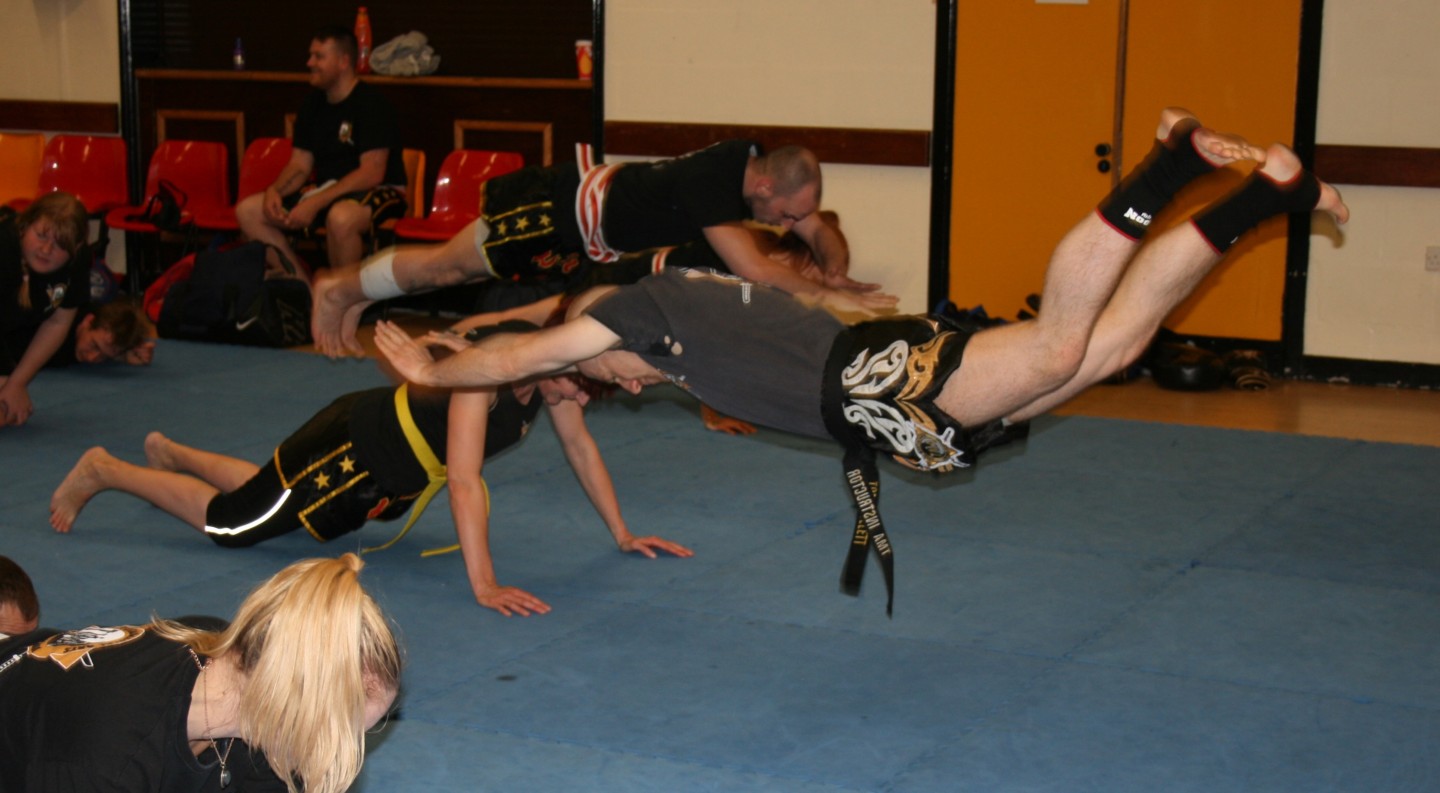
Strength and Conditioning: what is your goal?
Strength and Conditioning: what is your goal?
Strength and Conditioning – what is your goal?
Many people design and perform their workouts with little to no thought, just merely going through the motions out of habit. This passive attitude limits progress.
A better idea is to think about the specific physical quality you are trying to develop during your workouts or strength and conditioning sessions. Design and perform your workouts with a goal in mind and you will achieve long term success.
The following list will show the main physical traits that can be improved through strength and conditioning sessions and give you an idea of how to work on each one.
Strength
Strength is the maximum amount of force you can produce. To improve strength lift heavy weights for 5 reps (use a weight that you can only lift 5 times with good form, this should be around 80% of your single rep max weight) with relatively long rest periods of 2-3 minutes between sets. The rest time is essential to allow the CNS (central nervous system) to recover and deliver maximum strength on the next set. A good use of the rest period is to do some light shadow boxing or footwork drills.
Examples: squats, deadlifts, overhead presses, bench presses, pull ups, rows etc. 5 reps, 3-5 sets, 2-3 minutes rest in between sets.
Power
Power is rate of force development (how fast you can exert force). To improve Power focus on explosive movements using a medium weight for 5-10 reps with a relatively long rest period.
Examples: kettlebell clean and press, dumbbell snatch, medicine ball slams, Olympic lifts etc. 5-10 reps, 3-5 sets, 2-3 minutes rest in between sets.
Speed
Speed (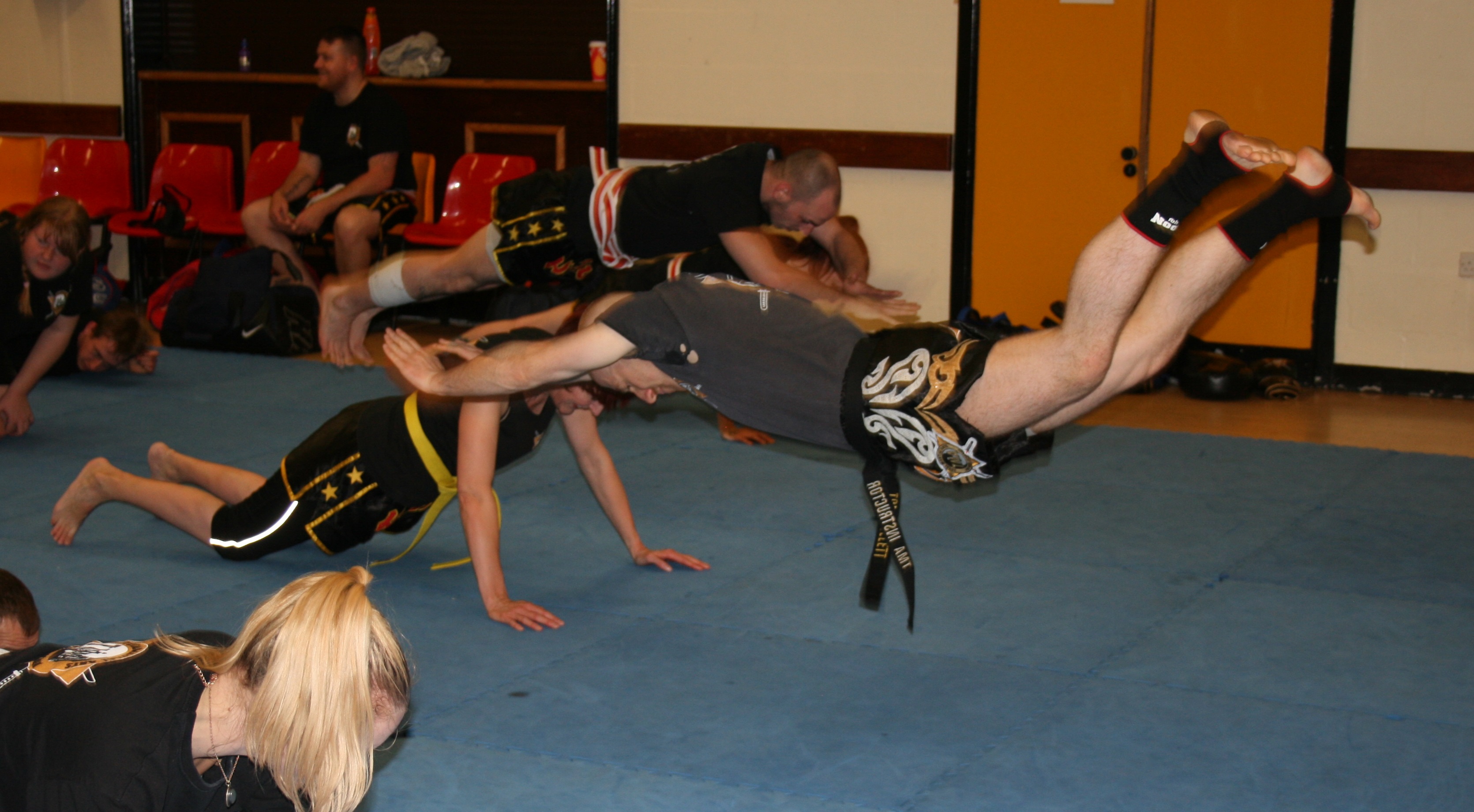 unsurprisingly) is how quickly you can move. To improve speed focus on dynamic, explosive movements primarily using body-weight only. Rep range for body weight exercises is less important, do as many as you can whilst maintaining good form.
Examples: squat jumps, plyometric push ups, jump lunges, lateral bounds, box jumps etc.
Endurance
I am using endurance as an umbrella term to cover a variety of physical attributes: aerobic, anaerobic, cardiovascular fitness and muscular endurance all of which contribute to being able to do more exercise before becoming exhausted. A complete programme will include both short intense bursts (sprints/High Intensity Interval Training) and longer steady state exercise (distance running/swimming, cycling)
The next time you are going to do a workout take a few minutes to think about what you are trying to achieve and select exercises that are appropriate.
For Your Child’s Health…
For Your Child’s Health…


Stay SMART
Stay SMART
Setting goals is the first step to achieving what you want in life. People who don’t set goals are also going to achieve what they’ve set out to achieve – nothing!
Even if these people are hard working and intelligent, they are missing the most important step for success throughout their lives – setting goals. It may sound like I’m saying that all we have to do to set a goal is say “My goal is _____!” and that’s all there is to it. Don’t we wish that were true!
In order to make an impact, we must set goals in such a way that we can achieve them, and then work hard towards attaining them.
To make it easier to set goals, they should follow the SMART Guidelines:
S=Specific.
M=Measurable
A=Attainable
R=Realistic
T=Time (there must be a timeline)
Learning to set goals correctly, the SMART way, is going to make it a hundred times easier to stick with your goals and will give you the strength to change your behaviour for the better – and stick with it!
Following the SMART guidelines when you create your goals will increase your odds for success. Doing what it takes to reach your goals, day after day, and learning how to continue your new habits throughout your life is essential in building discipline.
Goal achievement is at the very core of every one of my kickboxing classes…

Give me a call or email me , and I will let you know how I can help you achieve your
goals, step by step, and change your life for the better through my self empowering martial arts training programmes.
If you are looking to get fit or simply find a new workout to get yourself energised and
vibrant again, I would love to help you to make the change…