

Self-defence the HARD principle
Self-defence the HARD principle
The HARD principle is a simple set of guidelines to follow in a confrontation that Increase chance of success in a self-defence situation as well as avoiding legal issues. These guidelines are designed to be simplistic as they must function in high pressure situations. The HARD principles will work with the self defense and combatives techniques learnt in the Total Martial Arts Swindon basic program.
Hands:
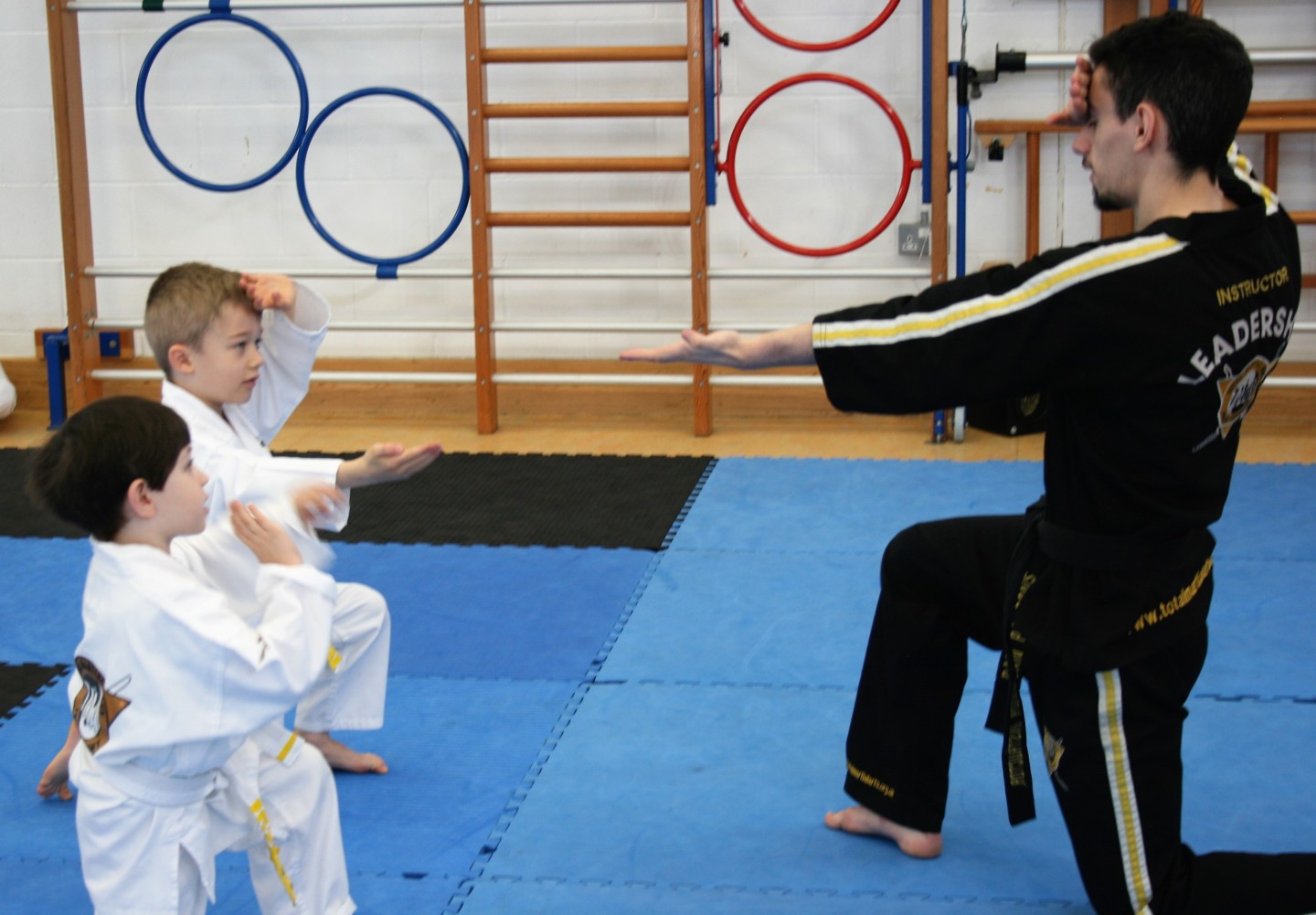
The hands a placed in a nonviolent and non-aggressive position that still creates a barrier between you and the aggressor and allows you to attempt verbal de-escalation of the situation or to execute a pre-emptive strike or defensive techniques if necessary. This is also known as a ‘fence’ position. Remember body language is even more important element than words in communication.
Ask:
Use your voice and ask the aggressor a question such as “what do you want” or “why are you doing this?” This will make it clear to any by standers or witnesses that you have taken verbal measures to prevent a physical altercation. Additionally asking a question acts as a thought interrupt which can distract an aggressor momentarily allowing for a pre-emptive strike.
Reposition:
This step involves moving to a more advantageous position such as near an exit or behind a barrier of some kind. Or it can mean taking a step backwards so that the aggressor must close the distance if they wish to escalate the situation to a physical altercation.
Decision:
This is the time to reassess the situation and they decide how to act. If you have taken to previous steps and the aggressor is still presenting a threat then the choice is simple fight or flight.


Fitness=Happiness for Kids.
Fitness=Happiness for Kids.

Lose Fat and Build Muscle part 5: Don’t Fail
Lose Fat and Build Muscle part 5: Don’t Fail
This is the final article of the series and it will cover an oft overlooked part of every program: How not to fail.
The overwhelming majority of self-directed training and nutrition programs
fail. You may be one of the many who have tried something and failed before.
If not, you almost certainly know someone who has.
Yet people ALSO get in shape successfully all the time! They’re losing fat, building muscle, and living stronger, more confident lives. What are they doing differently?
There are two vital aspects to successfully following a fat loss program and achieving long lasting results:
- Accountability
- Gradual change
Accountability
One thing successful people do is to find help. They find an experienced instructor who has helped others, and they do what that instructor tells them. Or they find a friend who has lost fat and copy their methods.
They do something to find a human relationship with someone who knows what to do and has obviously done it. And then they do it also. Mentorship and support are absolutely essential to fat loss. Those who have it, succeed. Those who don’t, fail. Simply put: to ensure success find someone to teach you.
The human brain is made to analyse things, which is useful. However it’s easy to get lost in endless analysis which leads to inaction. A great instructor, on the other hand, has already done the research and has practical experience thus can simplify things to the point where you feel confident skipping the analysis. And actually start doing.
An additional aspect to accountability is motivation. The majority of people are incapable of effective self-motivation especially in the long term. You are more likely to do what’s necessary for fat loss and muscle gain if you promise your instructor or friend that you will do it then report back to them on your success or failure in the future.
Gradual change
We have all heard the saying ‘Rome was not built in a day’ meaning that it takes a long time to create something great and lasting (Rome is referred to as the eternal city). This logic ought to be applied to any effective fat loss and muscle gain program. Self-directed fat loss programs fail the majority of the time. This is often due to people trying to learn and do too much at once.
At Total martial arts Swindon our students achieve an amazingly high success rate.
This is because we know how lasting change really occurs. Successful, lasting change only happens by introducing new habits or behaviours gradually – and only when a student is fully confident they can do them. We introduce new behaviours and habits 1 at a time. Then once the student has shown that they can follow the new behaviour consistently for 2 weeks we introduce another and so on.
Below you will find a list of proven habits and behaviours for fat loss. Read through the entire list and find one habit that you are confident you will be able to follow for the next 2 weeks. Select the one that seems easiest for you and get started right now.
1. Exercise for 30 minutes per day
2. Take fish oil and a multivitamin at breakfast every day
3. Drink at least 8 cups of water every day
4. Eat at least 4 handful sized servings of vegetables every day
5. Sleep at least 8 hours (including naps and night-time sleep)
6. During each meal, stop eating when 80% full
7. Twice during the work day, get up and do 5 minutes of muscle stretching
8. Eat 4 – 5 meals per day
9. Eat lean protein with each meal
10. Replace grains with greens during each meal
Once you have been successful in doing your chosen habit consistently for 2 weeks add another one and do that also for the next two weeks. Keep building it up gradually.
Once again we will emphasise. You cannot do it all at once, every day. But the good news is you don’t have to!
You can make fat loss complex – and most likely fail. Or you can make it simple by applying the strategies covered in this course, and see amazing success.
Martial Arts Training is not 'just fighting'
Martial Arts Training is not ‘just fighting’
At Total Martial Arts academy in Swindon we talk about developing our junior students holistically or developing the ‘whole person’ rather than ‘teaching people how to fight.’ This article will look a little deeper into What this means.
Some schools say that the sole purpose of training in the Martial Arts is to learn to fight and the rest is just ‘fluff’ and extraneous, but is a ‘fighter’ a Martial Artist?

The majority of our students wanting to learn Martial Arts don’t come to the Martial Arts to learn to fight, 99% of the phone calls we take are from parents who want their children to be confident, fit and to be able to defend themselves. These goals reinforce each other. What’s most likely to kill you? It’s not the street mugger or bully, your own health is most likely to bring you to an early demise, therefore the first rule of self-defence is – look after your health!
If you work on your posture, breathing and mental condition and then exercise sensibly you are likely to stave off the biggest threat to your existence.
To then prevent a lot of trouble in your life you need to work on your ‘emotional intelligence’.
What is ‘emotional intelligence’? An emotionally intelligent person has well developed interpersonal and intrapersonal intelligences, the level of emotional intelligence is an indicator as to how well someone will do in life, they will understand and manage their emotions, be friendly and outgoing, self confident and self motivated, value relationships, be a good team player, listen well, lead others, like to work and learn in groups and set and work towards targets.
Any good Martial Arts Instructor will teach all these aspects and personify the qualities. Think about how much trouble one could avoid by using these skills. Controlling fear and anger, being able to show confidence and deal with other people’s problems in a friendly and natural way are the qualities that can stop violence in its tracks.
It also means that someone with these skills can develop good training relationships, learn faster and get on much better professionally at work.
The author of ‘Maximum Achievement’ Brian Tracey said:
“Today, the greatest single source of wealth is between your ears. Today wealth is contained in brainpower not brutepower.”
The learning parts of the brain are the Neo-Cortex where higher order thinking and problem solving take place and the Limbic System where our emotions and long term memory function – we remember best when we use our emotions in learning.
Under stress we revert to the Reptilian Brain which blocks the Neo –Cortex and Limbic System from thinking and remembering as we are in primitive ‘survival mode’ so learning is slowed down or prevented. This is when we go into a stressed ‘fight, flight or freeze’ mode, losing our temper or panicking. It doesn’t shut down the right hand side or ‘intuitive’ part of the brain so we are still able to react appropriately to dangerous situations and control our emotions. Think of when you are driving and how you intuitively read the road and situations that may occur and react instantaneously without going into panic.
The learning process is also enhanced if proper, permanent learning pathways are used, connecting the information to something that is relevant to the student in a way that excites or stimulates their imagination and emotions in a positive manner, challenging their thinking and making them want to find out more.
Stress should be applied gradually in such a way that the student learns how to deal with it in a positive structured way, using established knowledge, intuition and confidence.
People learn in different ways and the Instructor needs to be able to present the information in a way that they can process. Some respond to visual stimulation, in the form of demonstration, pictures, diagrams and so on, some to auditory, hearing explanations, moving with rhythm, cadence, chanting and sound and some kinaesthetically by practical application, touching, doing and moving.
As a coach, we need to use all three learning styles, but some prefer to learn in one or two of these ways. A good teacher is aware of this and is careful to present the knowledge across all three spectrums.
This is why lesson planning is so important, if the students are aware of what the content and outcome of the lesson is supposed to be, how the knowledge is being given to them, how they are going to process it, how it is going to be practiced, verified and validated, how they will have the opportunity to challenge it and give and get feedback, then they are on track to progress in self development and emotional intelligence. This will give them the overall ability to develop physically and mentally and defend themselves against anything that might influence them in a negative fashion.
Lose Fat and Build Muscle part 4: Which Supplements to take, if any
Lose Fat and Build Muscle part 4: Which Supplements to take, if any
In the previous articles of this series we covered nutritional principles and exercise for fat loss and muscle gain. This article will explain which supplements to take and which to avoid.
A quick internet search will show the vast array of nutritional supplements for sale. At Total martial arts we often get asked the question “which supplements should I be taking?” The answer is very few, while we know that certain supplements can be useful, people overestimate their importance and are confused about the subject.
With this article we will make things very simple for you and tell you what supplements we recommend (there’s not many).
One legitimate approach is to simply take nothing. Keep in mind you don’t need supplements. Ultimately they’re supposed to supplement other things, like the food you eat and the physical activity you do. Many of our students have got into shape over the years taking nothing at all. So that’s where we start at TMA. Taking no supplements at all is okay.
There are a few supplements that have a great deal of legitimate research behind them performed by unbiased academics and published in peer reviewed journals. This research is publicly available and anyone with an internet connection can view it. Of course, to read it, one must wade through scientific jargon, but it can be done. Our instructor staff analyse legitimate research and we turn that into a few, simple recommendations for our students. So, the two strategies that make sense are:
1) to avoid supplements altogether, or
2) to examine legitimate research and use that to decide.
Now, we shall examine the second option.
In all the research we have looked at, there is really just a single supplement we wholeheartedly recommend and 3 others that come with a caveat/are a matter of convenience.
- Fish Oil: This is the only supplement we wholeheartedly recommend as it is the best source of the Omega-3 fatty acids eicosapentaenoic acid (EPA) and docosahexaenoic acid (DHA). There is a great deal of research proving fish oil works for fat loss, increases metabolic rate, decreases inflammation, improves cardiovascular health and is important for nervous system function and brain development. We recommend the liquid rather than the pill form as liquid fish oil tends to be higher purity and it’s easier to take the necessary amount in a liquid form. This is the brand we recommend: Carlson The Very Finest Fish Oil Liquid Omega-3 Lemon, 500ml. Take 1.5-2 teaspoons per day with meals.
- Protein powder: This is not necessary as it’s preferable to get your protein from whole foods like lean meats, fish, eggs and vegetarian sources. But since some people don’t always have time to make proper food they find themselves eating too little high quality protein. That’s why adding some protein powder can be helpful. This is the brand we recommend: MyProtein Impact Whey Protein unflavoured. Take a maximum of 4 scoops (80g) per day. Some people have trouble digesting milk derived protein powder so can try a plant based alternative instead such as hemp protein.
- Multivitamins. Once again this is not necessary for most people but a multivitamin can be used as a temporary solution for those who are not getting adequate vitamins and minerals in the diet. We recommend a multivitamin as a temporary measure for fighters who are cutting weight and for people making the gradual transition from a very unhealthy diet to a healthy diet.
- Greens supplements. If you get enough vegetables, a greens supplement is unnecessary. Some people simply don’t eat enough vegetables, and are missing out on the micronutrients they contain — many of which help you lose fat either directly or indirectly. And a greens supplement can help here.
A lot of thought and a lot of research has gone into these recommendations – these supplements are what we use and they’re also what we encourage our students to use. Nothing more.
In the fifth and final part of this series of articles we will cover why most people fail at fat loss, and how not to be one of them.
Help your Child Perform Under Pressure
Help your Child Perform Under Pressure
At Total Martial Arts Swindon we know one of the primary methods for learning a martial art is repetition. Although our job as coaches is to make classes varied and interesting for the students by disguising the repetition, it is important that we constantly repeat particular actions, movements and sequences over and over again. Research has shown that it takes between 300-500 repetitions to learn a new skill.
We have all heard the phrase ‘practice makes perfect’, but if we can already perform a movement why do we have to continue to go back and keep practicing the same things?
PERFORMING UNDER PRESSURE

Performance Choking: an unexplained sudden drop in performance for no physical reason.
It is necessary to perform under pressure in many areas of life and sometimes that pressure can adversely effect on our skill level. For example, you may find that although you know you can perform a technique well, when asked to demonstrate in front of a group of people it can go wrong or we forget things. This is known as ‘choking’, it is brought on through the stress of performing under pressure.
How are these 2 problems related? It’s all to do with the way we learn. To be the best we can be as martial artists, we need our movements to be instinctive. This will ensure that that we can perform to the very best of our ability, even when under pressure – whether that pressure comes from a crowd of spectators or the threat of an attacker. The key is to understand the learning process. When a junior martial arts student is able to master performing under pressure this will have great benefits in their whole life; achieving results in tests at school and in the workplace later in life.
HOW WE LEARN NEW PHYSICAL SKILLS
There are 2 stages of learning, these are known as Explicit and Implicit.
Explicit learning is the first stage of skill or knowledge acquisition. It relates to how your mind processes new information when learning a task. You receive information and process it into the required action. This action is governed by a part of the brain known as the Prefrontal cortex. At this stage you need to focus and concentrate, putting a lot of thought into your actions (this is called conscious competence). As you practice and develop through repetition the movement becomes automatic, this is the Implicit (second stage) of learning. The control for the action moves to another part of the brain called the Basal Ganglia. This part of the brain is responsible for habits which require no conscious thought (known as unconscious competence) and is a bit like working on auto-pilot, for example blinking or chewing. If you repeat the skill enough, it will become instinctive and unconscious movement. You could be thinking about something entirely different and unrelated, or be surrounded by distractions yet still be able to perform the action perfectly.
So why does it go wrong? When you are under pressure to perform well you go into a state of heightened awareness which can make you think too much about what you are doing and so switch control back from the Basal Ganglia to the Prefrontal cortex within the brain. This is turn then puts you back into ‘learning’ mode making you have to think about each and every move you make which in turn can make you ‘choke’ your performance, make mistakes and make you feel like a complete beginner all over again.
So what can you do about it?
Practice, practice, practice
Preparation is very important to be able to perform actions whilst ignoring distraction. For the movements to become a solid unconscious ability you need to imagine the exact situation for the performance when you practice, similar to actors having dress rehearsals. For example, if you are going into competition, when you practice you need to picture in your head the surroundings you will be performing in, the way you will feel, the noise of the crowd etc etc. When practicing self defense skills you need to imagine that you are in a real situation where you need to defend yourself. Imagine all the things that could go wrong so you are prepared for any situation which could take you out of that unconscious competence. This way, if or when you find yourself in that situation you are much less likely to return to the initial learning process and be able to react better, faster and more confidently.
Test yourself by training under pressure, if performing a kata or form try turning yourself to face a different direction than usual to see if the change in visual stimulus distracts your attention. You could try holding a conversation whilst performing or listening to music.
Make sure that when you train you always do your best. If you practice and repeat movements at a lower level than you are capable of, that is how you will perform under pressure. You will train yourself at an unconscious level to perform badly so make sure you always practice good quality techniques.
Lose Fat and Build Muscle part 3: Exercise
Lose Fat and Build Muscle part 3: Exercise
In the previous two articles of this series we covered nutritional principles and what to eat for fat loss and muscle gain. This article will explain how to exercise for fat loss. If you want to reduce body fat, both diet and exercise are critical.
Much like with nutrition, so much is written about exercise that it can seem like you’re doomed to failure without the perfect program. Once again this is just more nonsense we have grown sick of hearing.
Today we will cover the most important aspects of exercise so you can get started straight away.
When exercising to lose fat, there are two specific goals. The first is to burn calories. And the simplest way to do that? Aerobic exercise – like walking, jogging, running, or riding a bike. But here’s the thing: if you only do aerobic exercise, you may also lose muscle mass. That’s a problem because it’ll lower your metabolism. So you will also need to do some exercise that develops muscle, to stay strong, look good, keep your metabolism high and burn fat faster. And that means resistance exercise – like free weights, body weight training, or circuit training.
In the end, if you want to lose the most fat and look your best, you have to do some calorie-burning exercise and some muscle-preserving or building, exercise.
Having established the type of exercise required we will now tell you how much exercise you need to do. The answer is simple: 5 hours a week.
That’s what works with our students, and there’s strong research to support the recommendation, too. A study undertaken by the University of Wyoming looked at 1500 people who exercised regularly. And the key result was: those who exercised at least 5 hours a week were happiest with their bodies. While those that exercised less did not get the results they wanted.
Now, some students come to us doing almost 5 hours per week already. So, if they’re close to the magic 5 hour number, we just get them to increase the volume and intensity a little, or perhaps change the kind of exercise they’re doing.
The majority of students however come to us doing a lot less. Frequently no exercise at all. So, what do we do with them?
We don’t ask them to jump to 5 hours right away. Because, for most people, that’s too much too soon and they will not be able to keep it up. Instead, we gradually increase their exercise, asking them to do just a little more than they’re currently doing. Not only is that easier for them – it’s the right thing to do in the long term. The expectation that people can make massive, instant changes to their lives — and make them last — is the biggest reason people fail to lose fat and keep it off.
If you’re currently doing no exercise, just focus on moving a little more and exercising an hour or two each week. And if you’re doing more exercise than that already, just gradually increase your volume until you reach five hours each week. And make sure you’re doing both calorie burning exercise (like jogging) and muscle-preserving exercise (like training with free weights.)
At this point, I want to share with you the single most important thing you will ever learn about exercise for fat loss: it’s a concept called “Progressive Overload.” In plain English, it means: consistently challenging yourself to do a little more, or a little better.
For example, let’s say yesterday you went for a 10 minute jog. Well, then today; go for 11 minutes. If in your last workout you lifted 40 kilograms, then today; lift 41 kilograms.
That’s progressive overload. Every time you do physical activity, you write down what you did, and the next time, you do more, or do better, even in the smallest ways. It’s a really powerful – and unbelievably easy – technique.
So let’s recap. The simple keys to exercising for fat loss are:
- get moving – do some exercise and do it right away
- mix calorie burning exercise (like jogging) with muscle preserving exercise (like training with free weights)
- work your way up to 5 hours of exercise per week
- track what you do, and challenge yourself to do a little more, or a little better, each time
A great way to get all the exercise you need is to enrol in the Total Martial Arts Swindon basic program. This includes calorie burning exercise in Kickboxing, Jun fan and Krav Maga classes along with muscle developing exercise in the ‘combat conditioning’ fitness classes.

In the next article of this series we will cover a topic we get a great many questions on: nutritional supplements. We’ll talk about which ones should you take – or if you should take any at all.
Healthy Eating For Your Children
Healthy Eating For Your Children
The problem
Recent statistics from a large-scale survey in the UK reveal that 25 percent of boys and 33 percent of girls aged between two and nineteen years are either overweight or obese – furthermore there’s little sign the incidence of obesity is slowing.
Obesity is currently estimated to cost the country around £2 billion annually in healthcare and associated costs and shortens lives by an average of nine years. Some health experts have even stated we’ll soon see parents outliving their children.
Yet another concern is that parents are getting so used to seeing overweight kids, they don’t recognise their own children are obese.
Last year, a study from the Peninsula Medical School in Plymouth, revealed that:
- three quarters of parents failed to recognise their child was overweight.
- 33 percent of mums and 57 percent of dads considered their child’s weight to be ‘about right’ when, in fact, they were obese.
- one in ten parents expressed some concern about their child being underweight when they were actually a normal, healthy weight.
What can be done
- Don’t force younger children to eat everything on their plate – kids have small stomachs and also rapidly become tired of the same taste, which is why they often only eat half of their main course but still want a pudding – they’ve simply got bored with the taste of the main course.
- Avoid using foods as a reward – it simply becomes more desirable. But that’s not all – other foods become less desirable, too. In other words, telling children they can have some sweets if they eat their veg simply makes the sweets more alluring and the veg less appealing!
- Get children involved at mealtimes – younger children in particular are far more likely to eat something they’ve made themselves so have them help you cook healthy meals such as fishcakes, homemade burgers, fruit muffins, wholemeal scones, smoothies and sandwiches. Meanwhile, encourage teenagers to eat with the family.
- Encourage children to eat regularly, especially breakfast – studies show that breakfast eaters tend to be slimmer than people who skip this meal. Smaller more frequent meals are healthier than few large meals.
- Don’t make your child’s weight and size an ‘issue’. To help your child lose weight focus on good nutrition, avoid using the ‘diet’ word, don’t weigh your child regularly
- Lead by example – if you and your entire family eat sensibly and exercise frequently, your child will be more likely to do the same.
- Be positive- talk to your child about the benefits of eating well and looking after their body. Rather than being too negative by talking only about the dangers of unhealthy foods. Health is generally not a priority for children so focus on other issues that are important to them.For example, for teenage girls explain that a healthy diet will give them glowing skin, shiny hair and strong nails, give them more energy to go shopping with their friends and help them concentrate so they’ll perform better in their favourite subjects at school.For boys, explain that eating well will help to build and tone muscles, give them great skin and help them do well in their favourite sports.
- Look carefully at what’s on the menu for school dinners and discuss with your child whether they’d prefer packed lunches. If they do want school dinners, talk to them about the healthier options they could choose, for example, a jacket potato with cheese and salad rather than a hot dog and chips.
- Be aware of what the whole family are eating – kids rarely have bad eating habits on their own so if your child is gaining too much weight, it’s unlikely the rest of the family is having a healthy diet. If this is the case, encourage a healthy, balanced diet for everyone. This means…- Cutting down on sweets, cakes, biscuits and fizzy drink- Eating fewer fatty foods such as chips, burgers and fried food
– Eating regularly, especially breakfast
– Basing meals on starchy foods and choosing wholegrain varieties, when possible
In Future articles we will be taking a closer look at specific foods and nutritional requirements for growing children.
Lose Fat and Build Muscle part 2: What to eat
Lose Fat and Build Muscle part 2: What to eat
In the previous article of this series we talked about how easy losing fat actually is and covered some simple nutrition principles that always work when it comes to fat loss.
- Calories down
- Protein up
- Replace some carbohydrates with veggies,
- Replace the bad fats with good ones.
This is the theory and in this article we will look at putting that theory into practice. The truth is, we don’t eat calories, or proteins, or carbs, or fats.
We eat food.
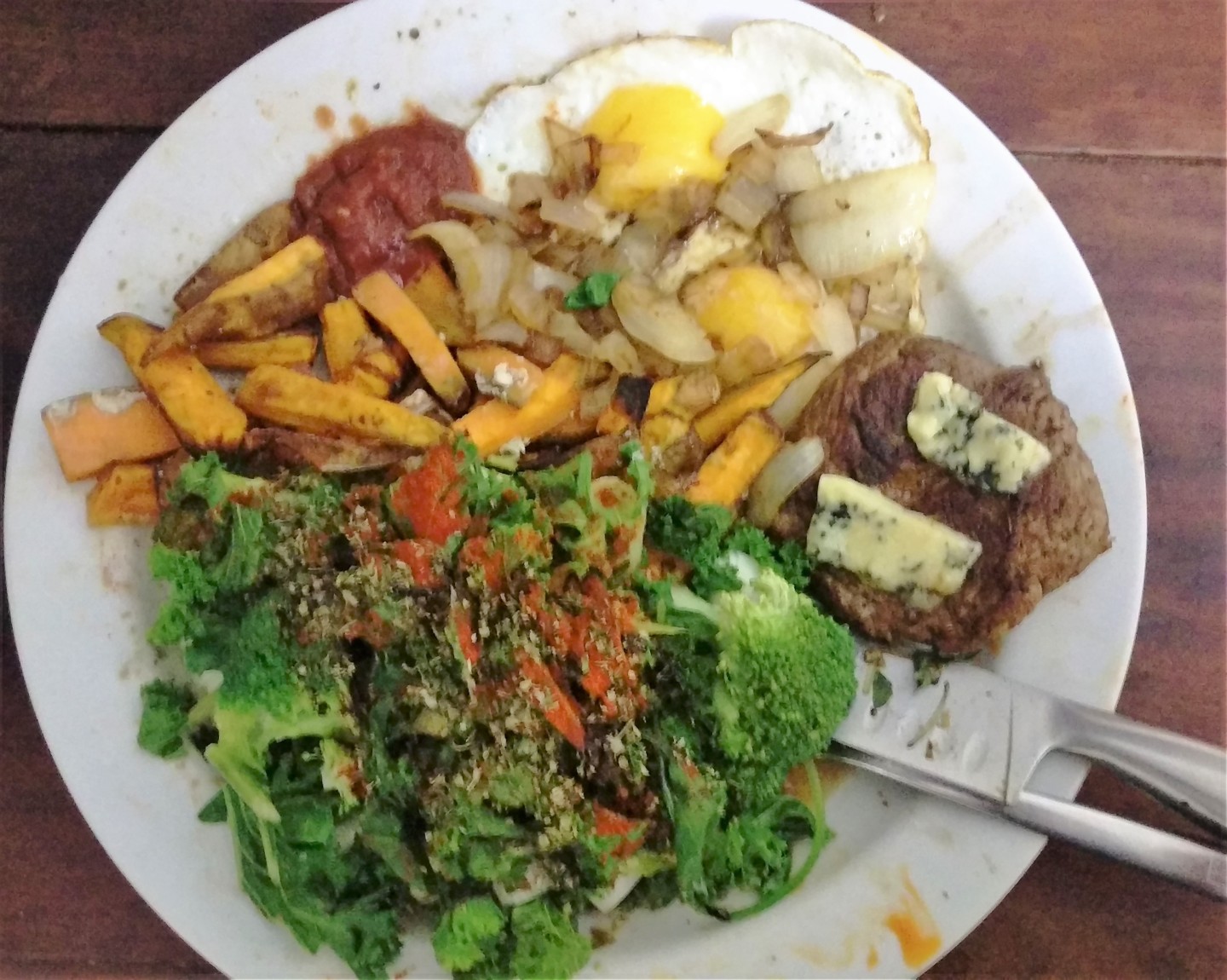
So the question is: what food should you eat to help you lose fat? That’s what we will cover today. And once again we will make this part simple and easy to do. Especially if you break it down one meal at a time.
We will use breakfast as an example.
Here are some breakfast options that won’t help you lose fat. Here are a few examples.
- The “quick breakfast” – like a bagel and cream cheese.
- The “full English breakfast” – like eggs, bacon, hash browns, and toast.
- The “at-home breakfast” – like a bowl of cereal and a glass of orange juice.
So, why aren’t these breakfasts great for losing fat? Well, let’s look to our checklist from the previous article.
- In most of these examples, the calories are too high – especially the full English breakfast.
- In addition, the protein is too low – particularly the at home breakfast.
- Also, the carbs are too high.
- None of the meals include vegetables.
- None of the meals contain healthy fats – and some of them contain too many unhealthy fats.
Another all too common breakfast is the “nothing breakfast” – which is exactly what it sounds like; you eat nothing.
With this breakfast the calories are way down. But it’s also missing all the nutrients that support your lean tissue and speed your metabolism. Additionally skipping breakfast almost always leads to overeating later in the day. Hence skipping breakfast is usually a bad idea.
In all of these breakfasts there are some fundamental flaws that will prevent you from losing fat. In fact, with most of them, you’ll probably end up gaining fat.
Here are some examples of healthy and tasty breakfasts that will help you lose fat and gain muscle
First, let’s look at a “breakfast at home” option. You have a few minutes, you want something delicious, and you want to do your best to lose fat. Well, here’s a good breakfast for that.
A nice omelette, a little side salad, mixed nuts, some avocado, and a touch of extra virgin olive oil dressing. This is easy to make, tasty and it covers every one of our nutritional principles.
When you are really in a hurry and do not have time to cook a good option is a ‘super shake’
This is made by putting the following into a blender for a few seconds: strawberries, blueberries, a splash of almond milk, a little bit of protein powder, some green vegetables and a few ice cubes. It’s quick, it’s incredibly easy, and it tastes amazing. Best of all, it’ll help you lose fat.
This example should demonstrate how easy it is to make any meal healthier without taking too long
We are not advocating a short term diet but rather a long term sustainable change and this takes time to achieve. Don’t try to change every meal and snack you eat straight away, because that’s too hard. It’s too much to change (later in this series, we’ll get into why that is).
For this week, just focus on improving one meal. That may seem small. But it’s a huge step toward lasting fat loss, and one many people never take. In fact, making one small improvement at a time is what we advise all our students to do.
In the next article of this series we will cover exercise for fat loss and muscle growth
Childrens Martial Arts
Childrens Martial Arts
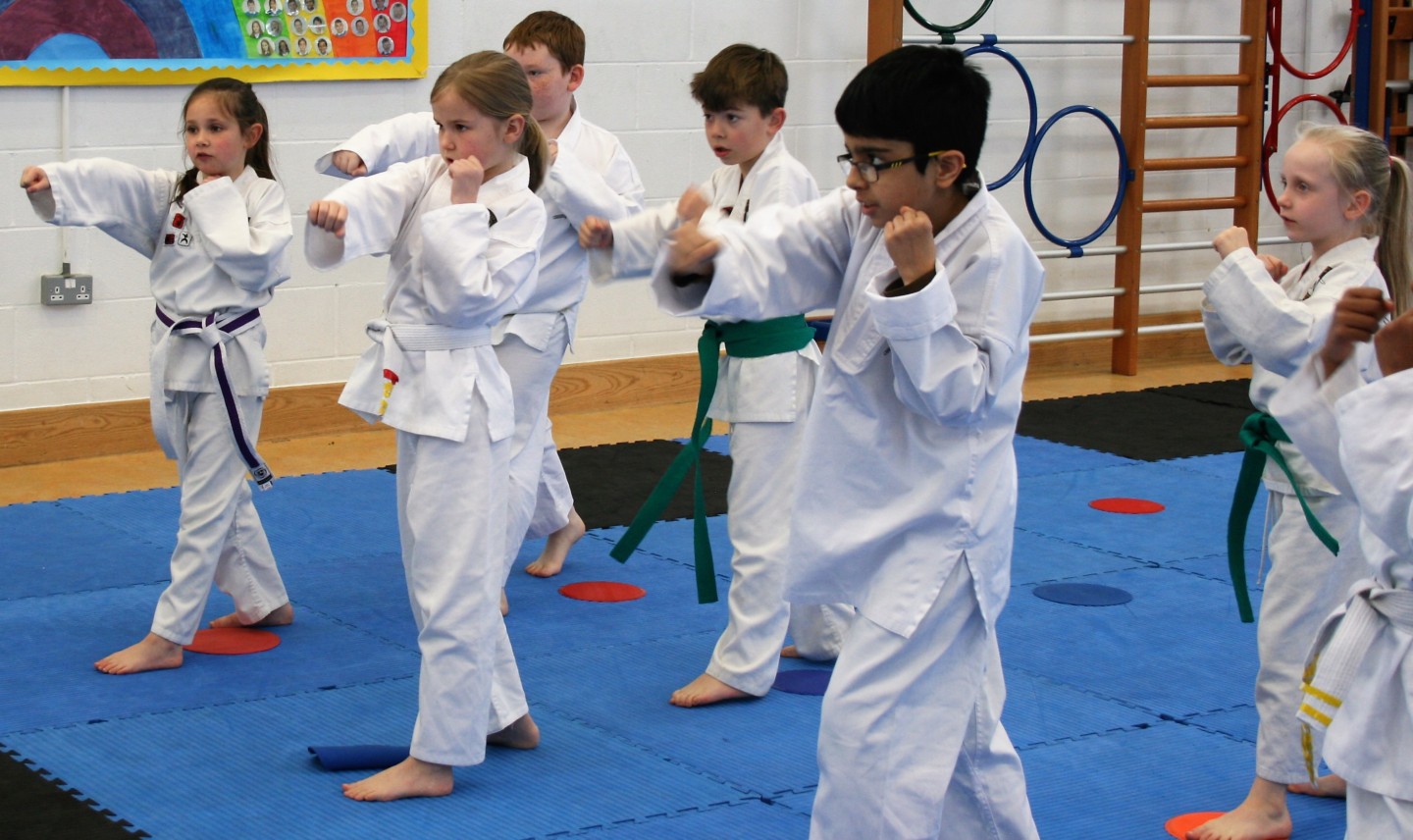
It is our belief that Martial Arts should raise a child’s self-esteem and build character and confidence. In order to achieve these qualities we have developed a training and development program that address the needs of children at different developmental stages of their early lives.

Our training programs are not just about physical skills but perhaps even more importantly promote life and interpersonal skills, as well as traditional Martial Arts values and success. Your child will be exposed to many positive traits and values of Martial Arts:
Self Confidence
With positive guidance young students will find the courage to move outside of their circle of self-doubt. Unlike adults, children with encouragement attempt more difficult Martial Arts moves or skills, without fear of failure. Such a quality is a basis for developing your child’s self-confidence, and encourages them to try new things in the future.
Staying Power
Our students find joy in improving their physical stamina. They can walk farther, run for longer and have the dedication to practice skills until they get them right. In turn, they learn never to give up. They strive harder and longer to reach goals. Even if at first they fail, they persevere. They won’t let self-doubts get in the way of finding ultimate solutions.
Respect
Through the Total Martial Arts method of martial arts instruction, your child will learn to build superior relationships based on trust and mutual respect. “To get respect one must first give respect”
Discipline
Our students learn to develop self-control, self-motivation and perseverance through martial arts discipline.
Goal Setting
One of our sayings is “the goals we set are the goals we get” On the road towards a Black Belt, the Total Martial Arts student gains the experience and motivation for success by earning progressively higher belt ranks. Success is the reward for goal setting.
Self Defence
And of course they will learn effective and powerful self-defence skills, (after all, we are a Martial Arts School), as well as the fundamental attitudes and sense of responsibility appropriate to those tools.

Black Belt Excellence
Our goal for every student is to help them earn their Black Belt not only in martial arts, but in life! By working toward this goal we create an instructional environment in which individual students develop confidence by accomplishing realistic and attainable goals.
The basic attitudes of a successful martial artist, and a successful person, are confidence, respect, discipline, goal setting and effective leadership. The traits and values that our students develop in class will stay with them in later life and improve their abilities and relationships at home and in school.