

Improve Your Life With Martial Arts Training
Improve Your Life With Martial Arts Training
Through Martial arts training we can learn and develop true values for living a well-rounded and healthy life physically, mentally and spiritually. Not only does practicing a martial art instills the right values and attitudes that are conducive to Self Defence, but you’ll improve your fitness and well-being.

Through struggle and adversity a Martial Arts student builds character and the ability to endure hardships and overcome obstacles that are placed in front of them. Some may think that only high level competitive athletes develop these attributes. However, we believe that ordinary individuals gain just as much from training in a Martial Art. For example, simply experiencing regular training, overcoming the failures, and experiencing the small victories makes you not only a better person but a true martial artist.

Although, ordinarily Martial Arts training gives you the opportunity to suffer, to see, and experience things that you normally wouldn’t on a normal daily bases. These experiences in themselves develop your character and push you beyond your boundaries in a safe a nurturing way. This is why we put so much effort into our fitness and conditioning program. Our fitness training is designed and intended to push and thus improve your boundaries while developing character, speed, strength, endurance and good overall body structure for close quarter fighting.

Hard martial arts and fitness training is important, it produces an attitude that when things get tough that you don’t give up, but drive through it, our fitness classes are a testimony to this. Becoming a true martial artist is a personal commitment in which you must make improving yourself your main priority and place it above the desire for rewards.
Our failures are our biggest strengths, rise from them and you’ll be stronger.

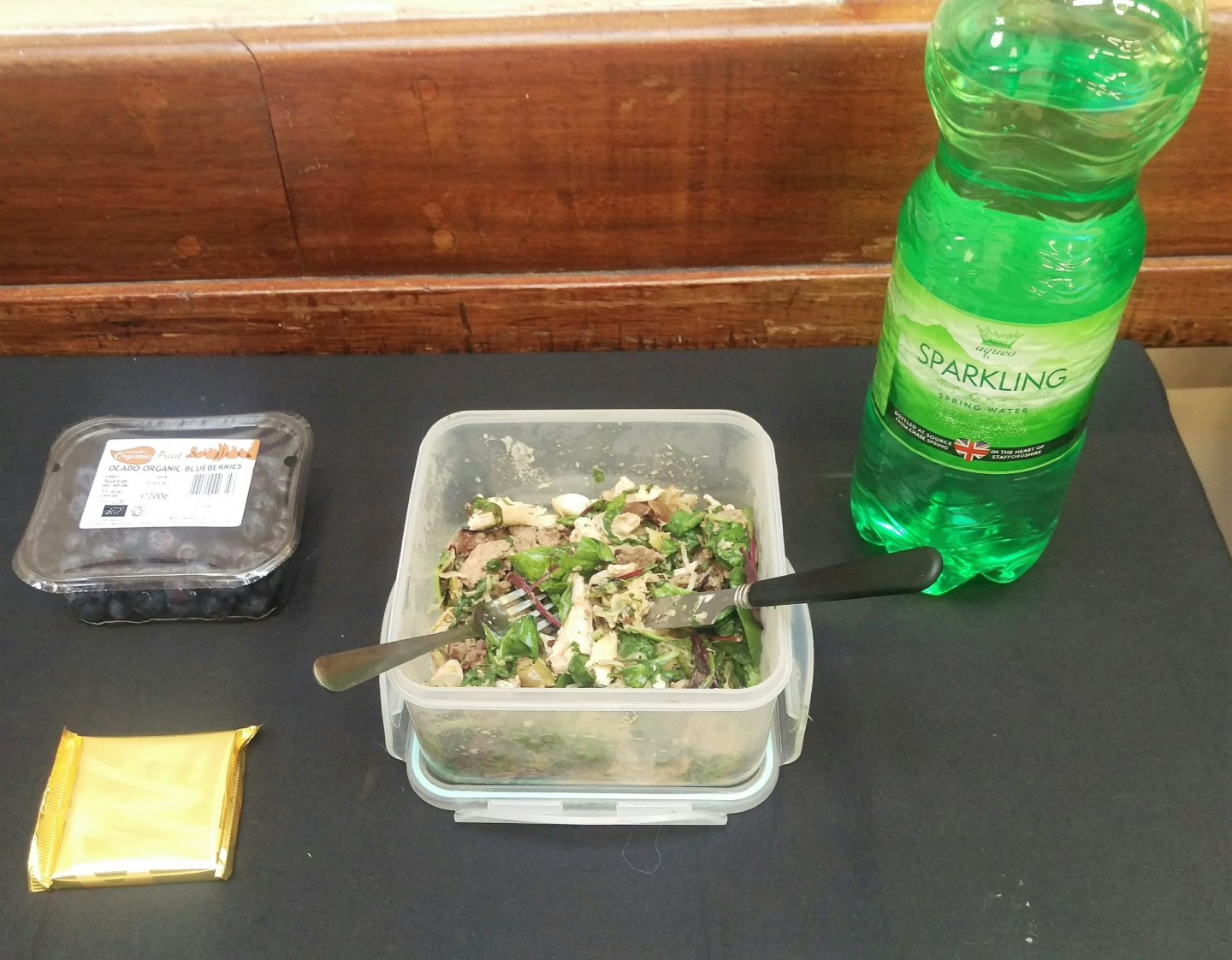
Healthy Eating and weight loss tips: Carbohydrate Control
Healthy Eating and weight loss tips: Carbohydrate Control
Many people who are looking to loose weight focus too much on the amount of fat they consume. While this is a factor its far more important and easier to limit the amount of simple carbohydrates consumed.
Simple Carbohydrates do have a place in a health conscious persons diet however they should only be consumed during or after exercise to aid in fast recovery. To avoid simple carbohydrates there are some easy changes that can be made to your regular diet.
For those of you that love sandwiches try changing what kind of bread you eat to reduce your sugar intake. White bread is the worst you could opt for, so often people go for wholemeal bread instead but even one slice of wholemeal contains around 1.6 g of sugar. The best bread for cutting out your sugar is sourdough bread as it has minimal sugar but still gives you the same great taste.
Yogurt is often regarded as a healthy snack but the flavoured varieties can come in at around 20g of sugar, just for a small serving pot. If you’re craving something creamy then try Greek yogurt instead of the fruity, flavoured ones. It is 30% protein and can be combined with sliced fruit or berry’s for a tasty, satisfying snack.
When you buy cereal you may think you’re avoiding the ones that are overloaded with sugar but even brands that are advertised as being healthier can be up to 25% sugar. If you want to avoid a huge sugar-hit at the start of your day then try porridge instead. It has low sugar levels but also provides you with high doses of Vitamin B, vitamin E and iron.
Granola bars can often be advertised as a healthy snack but an average granola can contain up to 14g of sugar. If you want a healthier on-the-go snack then try some jerky. It has no sugar and can provide a solid dose of protein, so it’s great as a post-workout snack.
If you’re a sucker for sauces with your meals, be it tomato sauce or brown sauce, then try making your own instead. Many of the sauces you buy can have around 5g of sugar, even in the tiny one serving packages. Making your own sauce is simple, all you need is some tinned tomatoes, a bit of onion and garlic and pinch of basil, and it cuts out a lot of the unnecessary sugar.
If you typically drink a glass of fruit juice in an effort to reach your five-a-day then try just fruit on it’s own instead. A normal glass of fruit juice can provide you with around 25g of sugar, whereas the fructose sugar hit that a piece of fruit provides you with comes with a good dose of fibre, helping to balance out the sugar.
The supplements that actually benefit martial artists
The supplements that actually benefit martial artists
Many serious martial artists go through a phase of taking tons of supplements in hopes of boosting their game, taking at least 50 pills and tablets each day, including thrice-daily multivitamins… Selenium… Reishi extract… Chromium picolinate…Turmeric extract… Branched chain amino acids… Phosphatidyl serine… Etc. Etc. Etc. The list goes on however the only real effect of these supplements is to make your urine very expensive they will not improve strength, energy levels or recovery times.

Why do so many people take so many different kinds of supplements? Here’s a few reasons:
1 – Wishful Thinking/laziness. It would be far easier if you could just pop a few pills every day instead of doing the hard work to maintain a healthy diet, putting in time training, lifting weights and doing cardio,
2 – Advertising. Many Bodybuilding magazines and fitness websites exist in order to sell supplements as their money comes from selling advertising rather than subscriptions.
3 – The Placebo Effect. Basically a placebo is a drug (or a supplement) that works just because you think it’s going to work, not because of anything about the drug itself.
Scientific American summed it up by saying “belief is powerful medicine, even if the treatment itself is a sham.”
And every study that has ever looked for a placebo effect has found one…
Every legitimate clinical trial of a drug or supplement must have a placebo group to show that the drug performs better than a placebo.
The placebo effect is huge when it comes to sports supplements. For example, there’s nothing more convincing than a friend who swears that a certain new product is ‘great’ and urges you to try it!
4 – Faulty Research. The wild claims made by the supplement companies are usually backed up by so-called ‘research.’ But when you look at it more closely, this research is usually a just a single study (or a cherry-picked selection of studies which all back up the claims being made).
But a single study proves nothing! And what’s even worse is that these studies are often small, poorly designed and improperly controlled experiments that nobody else has ever managed to duplicate (proper scientific practice require the results of experiments to be able to be duplicated by others before the results are confirmed).
In many cases the people who did the study also own the company making the supplement…
That’s why in science nothing is ever proven until many different and unbiased researchers have found the same result.
So, are there any good supplements you should be taking?
In order of importance, the ‘supplements’ that have real science behind them are the following:
1. Colourful fruits and vegetables (e.g. dark berries, dark leafy greens, beets, red grapefruit, etc.), these will provide important vitamins and minerals. And just for the record, potatoes and rice don’t count as vegetables.
2. Protein from varied sources (baseline 0.75 g protein/lb body weight day for average people; 1 g/lb per day for athletes, that means if you’re an actively training 200 lb grappler then you should be consuming about 200 grams of protein every day). This is important for the body’s repair and recovery after hard training
3. Fish oil. (Recent research suggests as much as 5-15 g daily) this helps to reduce inflammation, increase bone density and also control metabolism/fat burning. Tuna and salmon are a great source of fish oils. Fish oil capsules can be used to increase your intake but choose high quality capsules to avoid mercury contamination
4. Vitamin D (2000-4000 IU daily in the winter). This helps with bone formation/density. Vitamin D is produced by the body when exposed to sunlight so your intake should depend on the climate. Those with light skin are more easily able to produce vitamin D in low light conditions so less supplementation is required. Be careful not to exceed the daily dose of vitamin D because it is possible to poison yourself.
5. Creatine for athletes doing strength/power work (2g/day for a month). Creatine is found naturally in beef but is supplemented in powder form (avoid the liquid creatine supplements as the active ingredient breaks down in the liquid form) Always cycle creatine supplementation taking it for 1 month then stopping for a time. Creatine is good for increasing muscle mass and strength when weightlifting because it increases available ATP in the muscles allowing for more intense exercise. Fighters looking to compete at a certain weight class should avoid creatine as it increases water retention.
6. Caffeine in SMALL doses (50-100 mg, about 1/2 to 3/4 cup coffee), 1 hour before training. Caffeine is a stimulant and can reduce fatigue and increase power. Keep in mind that constant use of caffeine reduces its effectiveness.
And the big one, that trumps pretty much all others: SLEEP. This is important for recovery and hormone balance, try to get 8 hours sleep every night.
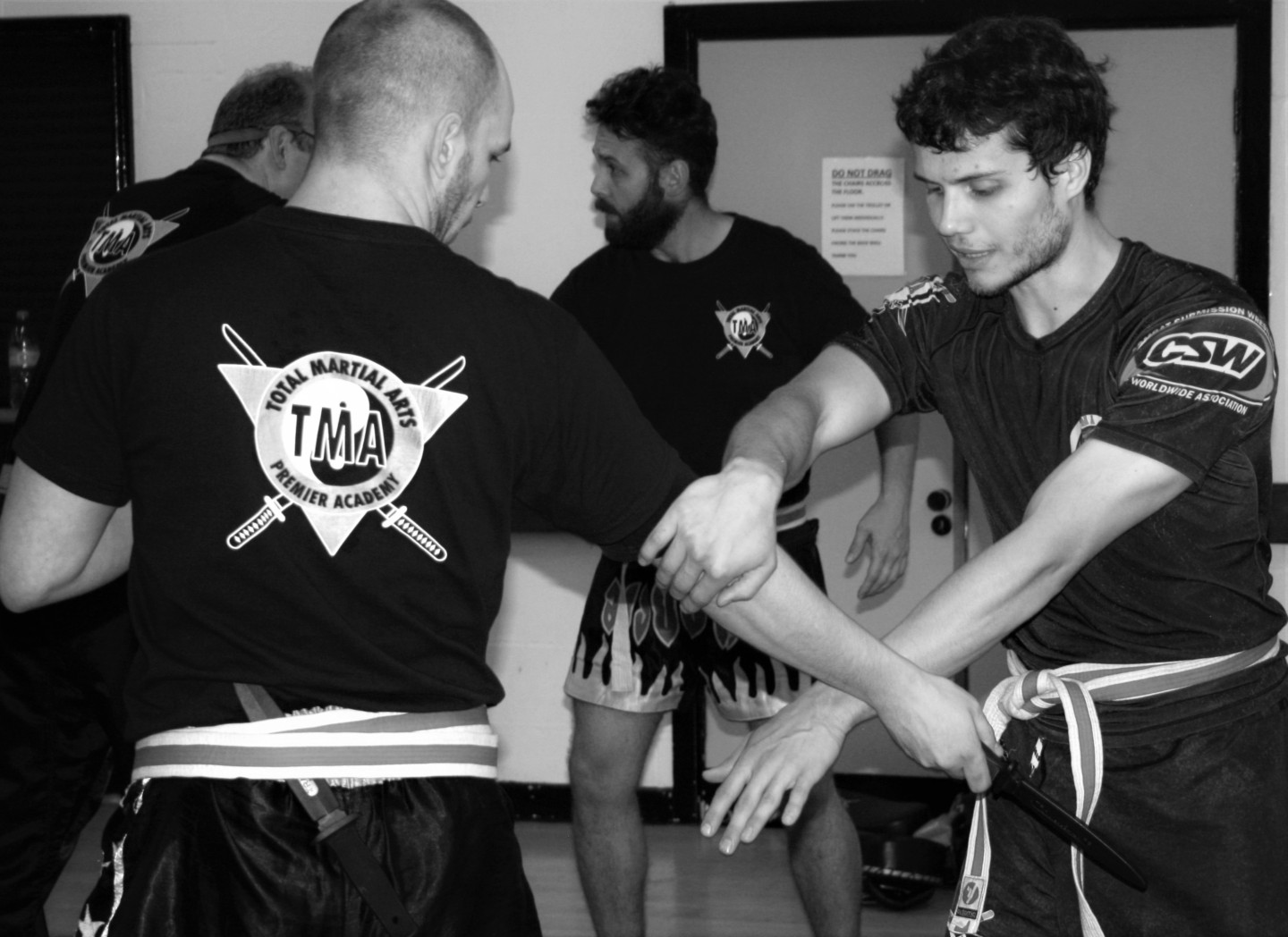
Self-defence the HARD principle
Self-defence the HARD principle
The HARD principle is a simple set of guidelines to follow in a confrontation that Increase chance of success in a self-defence situation as well as avoiding legal issues. These guidelines are designed to be simplistic as they must function in high pressure situations. The HARD principles will work with the self defense and combatives techniques learnt in the Total Martial Arts Swindon basic program.
Hands:
The hands a placed in a nonviolent and non-aggressive position that still creates a barrier between you and the aggressor and allows you to attempt verbal de-escalation of the situation or to execute a pre-emptive strike or defensive techniques if necessary. This is also known as a ‘fence’ position. Remember body language is even more important element than words in communication.
Ask:
Use your voice and ask the aggressor a question such as “what do you want” or “why are you doing this?” This will make it clear to any by standers or witnesses that you have taken verbal measures to prevent a physical altercation. Additionally asking a question acts as a thought interrupt which can distract an aggressor momentarily allowing for a pre-emptive strike.
Reposition:
This step involves moving to a more advantageous position such as near an exit or behind a barrier of some kind. Or it can mean taking a step backwards so that the aggressor must close the distance if they wish to escalate the situation to a physical altercation.
Decision:
This is the time to reassess the situation and they decide how to act. If you have taken to previous steps and the aggressor is still presenting a threat then the choice is simple fight or flight.

Lose Fat and Build Muscle part 5: Don’t Fail
Lose Fat and Build Muscle part 5: Don’t Fail
This is the final article of the series and it will cover an oft overlooked part of every program: How not to fail.
The overwhelming majority of self-directed training and nutrition programs
fail. You may be one of the many who have tried something and failed before.
If not, you almost certainly know someone who has.
Yet people ALSO get in shape successfully all the time! They’re losing fat, building muscle, and living stronger, more confident lives. What are they doing differently?
There are two vital aspects to successfully following a fat loss program and achieving long lasting results:
- Accountability
- Gradual change
Accountability
One thing successful people do is to find help. They find an experienced instructor who has helped others, and they do what that instructor tells them. Or they find a friend who has lost fat and copy their methods.
They do something to find a human relationship with someone who knows what to do and has obviously done it. And then they do it also. Mentorship and support are absolutely essential to fat loss. Those who have it, succeed. Those who don’t, fail. Simply put: to ensure success find someone to teach you.
The human brain is made to analyse things, which is useful. However it’s easy to get lost in endless analysis which leads to inaction. A great instructor, on the other hand, has already done the research and has practical experience thus can simplify things to the point where you feel confident skipping the analysis. And actually start doing.
An additional aspect to accountability is motivation. The majority of people are incapable of effective self-motivation especially in the long term. You are more likely to do what’s necessary for fat loss and muscle gain if you promise your instructor or friend that you will do it then report back to them on your success or failure in the future.
Gradual change
We have all heard the saying ‘Rome was not built in a day’ meaning that it takes a long time to create something great and lasting (Rome is referred to as the eternal city). This logic ought to be applied to any effective fat loss and muscle gain program. Self-directed fat loss programs fail the majority of the time. This is often due to people trying to learn and do too much at once.
At Total martial arts Swindon our students achieve an amazingly high success rate.
This is because we know how lasting change really occurs. Successful, lasting change only happens by introducing new habits or behaviours gradually – and only when a student is fully confident they can do them. We introduce new behaviours and habits 1 at a time. Then once the student has shown that they can follow the new behaviour consistently for 2 weeks we introduce another and so on.
Below you will find a list of proven habits and behaviours for fat loss. Read through the entire list and find one habit that you are confident you will be able to follow for the next 2 weeks. Select the one that seems easiest for you and get started right now.
1. Exercise for 30 minutes per day
2. Take fish oil and a multivitamin at breakfast every day
3. Drink at least 8 cups of water every day
4. Eat at least 4 handful sized servings of vegetables every day
5. Sleep at least 8 hours (including naps and night-time sleep)
6. During each meal, stop eating when 80% full
7. Twice during the work day, get up and do 5 minutes of muscle stretching
8. Eat 4 – 5 meals per day
9. Eat lean protein with each meal
10. Replace grains with greens during each meal
Once you have been successful in doing your chosen habit consistently for 2 weeks add another one and do that also for the next two weeks. Keep building it up gradually.
Once again we will emphasise. You cannot do it all at once, every day. But the good news is you don’t have to!
You can make fat loss complex – and most likely fail. Or you can make it simple by applying the strategies covered in this course, and see amazing success.
Lose Fat and Build Muscle part 4: Which Supplements to take, if any
Lose Fat and Build Muscle part 4: Which Supplements to take, if any
In the previous articles of this series we covered nutritional principles and exercise for fat loss and muscle gain. This article will explain which supplements to take and which to avoid.
A quick internet search will show the vast array of nutritional supplements for sale. At Total martial arts we often get asked the question “which supplements should I be taking?” The answer is very few, while we know that certain supplements can be useful, people overestimate their importance and are confused about the subject.
With this article we will make things very simple for you and tell you what supplements we recommend (there’s not many).
One legitimate approach is to simply take nothing. Keep in mind you don’t need supplements. Ultimately they’re supposed to supplement other things, like the food you eat and the physical activity you do. Many of our students have got into shape over the years taking nothing at all. So that’s where we start at TMA. Taking no supplements at all is okay.
There are a few supplements that have a great deal of legitimate research behind them performed by unbiased academics and published in peer reviewed journals. This research is publicly available and anyone with an internet connection can view it. Of course, to read it, one must wade through scientific jargon, but it can be done. Our instructor staff analyse legitimate research and we turn that into a few, simple recommendations for our students. So, the two strategies that make sense are:
1) to avoid supplements altogether, or
2) to examine legitimate research and use that to decide.
Now, we shall examine the second option.
In all the research we have looked at, there is really just a single supplement we wholeheartedly recommend and 3 others that come with a caveat/are a matter of convenience.
- Fish Oil: This is the only supplement we wholeheartedly recommend as it is the best source of the Omega-3 fatty acids eicosapentaenoic acid (EPA) and docosahexaenoic acid (DHA). There is a great deal of research proving fish oil works for fat loss, increases metabolic rate, decreases inflammation, improves cardiovascular health and is important for nervous system function and brain development. We recommend the liquid rather than the pill form as liquid fish oil tends to be higher purity and it’s easier to take the necessary amount in a liquid form. This is the brand we recommend: Carlson The Very Finest Fish Oil Liquid Omega-3 Lemon, 500ml. Take 1.5-2 teaspoons per day with meals.
- Protein powder: This is not necessary as it’s preferable to get your protein from whole foods like lean meats, fish, eggs and vegetarian sources. But since some people don’t always have time to make proper food they find themselves eating too little high quality protein. That’s why adding some protein powder can be helpful. This is the brand we recommend: MyProtein Impact Whey Protein unflavoured. Take a maximum of 4 scoops (80g) per day. Some people have trouble digesting milk derived protein powder so can try a plant based alternative instead such as hemp protein.
- Multivitamins. Once again this is not necessary for most people but a multivitamin can be used as a temporary solution for those who are not getting adequate vitamins and minerals in the diet. We recommend a multivitamin as a temporary measure for fighters who are cutting weight and for people making the gradual transition from a very unhealthy diet to a healthy diet.
- Greens supplements. If you get enough vegetables, a greens supplement is unnecessary. Some people simply don’t eat enough vegetables, and are missing out on the micronutrients they contain — many of which help you lose fat either directly or indirectly. And a greens supplement can help here.
A lot of thought and a lot of research has gone into these recommendations – these supplements are what we use and they’re also what we encourage our students to use. Nothing more.
In the fifth and final part of this series of articles we will cover why most people fail at fat loss, and how not to be one of them.
Lose Fat and Build Muscle part 3: Exercise
Lose Fat and Build Muscle part 3: Exercise
In the previous two articles of this series we covered nutritional principles and what to eat for fat loss and muscle gain. This article will explain how to exercise for fat loss. If you want to reduce body fat, both diet and exercise are critical.
Much like with nutrition, so much is written about exercise that it can seem like you’re doomed to failure without the perfect program. Once again this is just more nonsense we have grown sick of hearing.
Today we will cover the most important aspects of exercise so you can get started straight away.
When exercising to lose fat, there are two specific goals. The first is to burn calories. And the simplest way to do that? Aerobic exercise – like walking, jogging, running, or riding a bike. But here’s the thing: if you only do aerobic exercise, you may also lose muscle mass. That’s a problem because it’ll lower your metabolism. So you will also need to do some exercise that develops muscle, to stay strong, look good, keep your metabolism high and burn fat faster. And that means resistance exercise – like free weights, body weight training, or circuit training.
In the end, if you want to lose the most fat and look your best, you have to do some calorie-burning exercise and some muscle-preserving or building, exercise.
Having established the type of exercise required we will now tell you how much exercise you need to do. The answer is simple: 5 hours a week.
That’s what works with our students, and there’s strong research to support the recommendation, too. A study undertaken by the University of Wyoming looked at 1500 people who exercised regularly. And the key result was: those who exercised at least 5 hours a week were happiest with their bodies. While those that exercised less did not get the results they wanted.
Now, some students come to us doing almost 5 hours per week already. So, if they’re close to the magic 5 hour number, we just get them to increase the volume and intensity a little, or perhaps change the kind of exercise they’re doing.
The majority of students however come to us doing a lot less. Frequently no exercise at all. So, what do we do with them?
We don’t ask them to jump to 5 hours right away. Because, for most people, that’s too much too soon and they will not be able to keep it up. Instead, we gradually increase their exercise, asking them to do just a little more than they’re currently doing. Not only is that easier for them – it’s the right thing to do in the long term. The expectation that people can make massive, instant changes to their lives — and make them last — is the biggest reason people fail to lose fat and keep it off.
If you’re currently doing no exercise, just focus on moving a little more and exercising an hour or two each week. And if you’re doing more exercise than that already, just gradually increase your volume until you reach five hours each week. And make sure you’re doing both calorie burning exercise (like jogging) and muscle-preserving exercise (like training with free weights.)
At this point, I want to share with you the single most important thing you will ever learn about exercise for fat loss: it’s a concept called “Progressive Overload.” In plain English, it means: consistently challenging yourself to do a little more, or a little better.
For example, let’s say yesterday you went for a 10 minute jog. Well, then today; go for 11 minutes. If in your last workout you lifted 40 kilograms, then today; lift 41 kilograms.
That’s progressive overload. Every time you do physical activity, you write down what you did, and the next time, you do more, or do better, even in the smallest ways. It’s a really powerful – and unbelievably easy – technique.
So let’s recap. The simple keys to exercising for fat loss are:
- get moving – do some exercise and do it right away
- mix calorie burning exercise (like jogging) with muscle preserving exercise (like training with free weights)
- work your way up to 5 hours of exercise per week
- track what you do, and challenge yourself to do a little more, or a little better, each time
A great way to get all the exercise you need is to enrol in the Total Martial Arts Swindon basic program. This includes calorie burning exercise in Kickboxing, Jun fan and Krav Maga classes along with muscle developing exercise in the ‘combat conditioning’ fitness classes.

In the next article of this series we will cover a topic we get a great many questions on: nutritional supplements. We’ll talk about which ones should you take – or if you should take any at all.
Lose Fat and Build Muscle part 1: Nutrition
Lose Fat and Build Muscle part 1: Nutrition
Losing fat is nowhere near as difficult as most people – including many experts – make it out to be. There is a great deal of contradictory and complex (mis)information available on the subject. You can take a few minutes to confirm this right now by doing a quick google search on the subject or taking a look at the thousands of titles available on amazon. Doing this helped me realize why fat loss can be such a miserable struggle for people. And why most real people just give up after a few weeks. But it also reminded me why I’m so proud of what we do here at Total Martial Arts Swindon. In this series of articles I am going to show you how simple it really is. Because I want you to build up the confidence of knowing that not only is the fat loss process clear and simple, but that you’ve got what it takes to be successful and get into the best shape of your life.
At Total martial arts our knowledge comes from extensive research as well as over a decade of practical experience helping hundreds of students get into great physical condition.
When it comes to fat loss nutrition, there are only five important things you need to think about. Everything else is just a distraction.
- To lose fat, you must gradually decrease your calories. In other words, you have to start eating less. And we’ll talk about some easy and effective strategies for achieving this in the next article.
- To support your muscle tissue, you have to gradually increase your protein intake. Put simply, eat more lean meat, chicken, fish, or equivalent vegetarian source. These foods speed up your metabolism, help you feel full, and provide important amino acids for repair and recovery after exercise.
- To create the right environment within the body for fat loss, you must gradually decrease your carbohydrate intake. Put simply, eat less sugar and starches – like processed grains or sweets. Eating too much of these foods can wreak havoc on your bloodstream, increasing hormones that lead to fat gain.
- To make sure you’re losing fat in a healthy and sustainable way, you need to gradually increase your fruit and vegetable intake. You can think of it this way: start replacing your grains with greens. If you do this, you’ll be getting more fibre, vitamins, and minerals.
- To support your metabolism and various other body and brain functions, you need to gradually replace your bad fats with healthy ones. By adding things like olive oil, avocados, nuts, seeds, and fish oils, you’ll speed your metabolism and lose more fat than ever before.
For the Nutrition aspect of fat loss, that’s it.
Calories — down. Protein — up. Replace some carbs with veggies, and replace the bad fats with good ones. Simple.
For the people who are not currently following these rules, let’s talk about why. In the majority of cases, it’s because they’re not paying attention.
Improving your diet isn’t just about knowing what you should be eating. It’s also about taking an honest look at what you are eating currently.
Do you think much about what you’re eating? Whether you’re getting proteins, fats, or carbs? And, if you do think about those things, how does your diet compare?
Be mindful of what you’re eating the next time you sit down for a meal.
Perhaps print this article out and read it the next time you eat a meal. Think about how your calories, proteins, carbs, and fats stack up.
Now as you start to become more aware, you’ll likely find that there are some aspects of your diet you want to change. And the question then becomes: how do you actually do that?
How do you actually incorporate the desired changes into your lifestyle in the long term – with your food preferences and tastes, your schedule, your hobbies, job, school, family, etc.?
We will cover that in the next article of this series which will go into the specifics of what to eat. Once again we will take what may seem like a complex subject and make it simple. Because in my experience the simpler I can make it the more successful you will be.
Total Martial Arts Swindon 07765202363

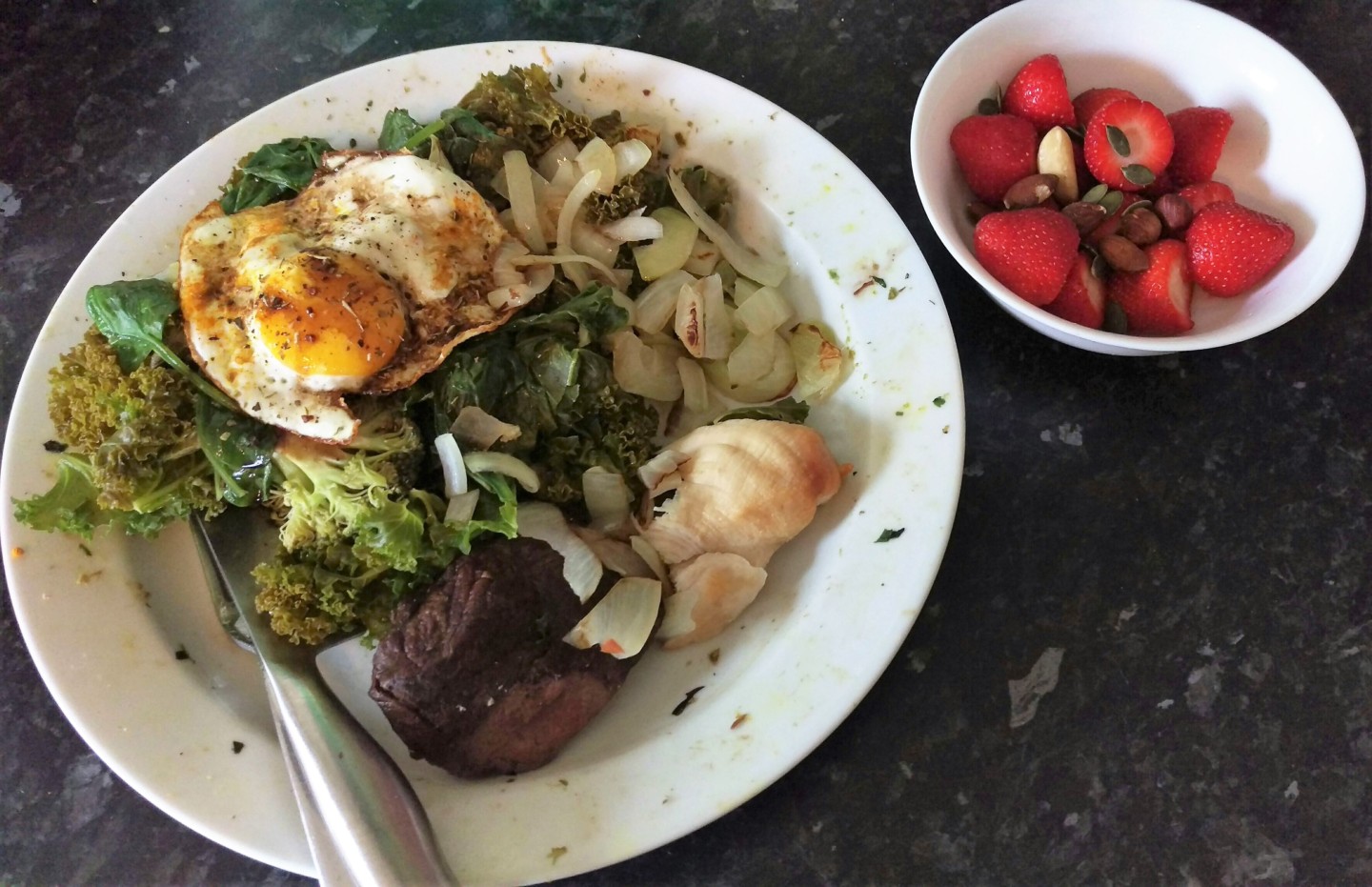
Martial Arts Athlete Grocery Shopping List
Martial Arts Athlete Grocery Shopping List
The following is an overview of the sort of foods you ought to purchase in order to fuel hard training in Muay Thai and promote quick recovery between sessions.

Proteins
- Lean red meat (grass fed beef preferred)
- Fish (wild caught preferred)
- Chicken (free range preferred)
- Eggs (omega-3 and cage free preferred)
- Organic Plain Greek yogurt, cottage cheese, unpasteurised hard cheese
- Organic beef jerky
Vegetables and fruit
- Spinach, Kale (organic)
- Bell peppers: red, green, yellow (organic)
- Carrots
- Tomatoes (organic)
- cucumber
- Cruciferous vegetables (broccoli, cabbage, cauliflower)
- Mixed berries (strawberries, raspberries, blueberries etc.) (organic)
- Oranges, banana, apples (organic), grapes (organic), kiwi fruit, water melon.
Starchy carbohydrates
- Mixed beans/peas (black beans, lentils, split peas, etc.)
- Whole oats (large flakes)
- White quinoa (organic)
- Wholegrain brown rice (organic)
- White potatoes
- Sweet potatoes
Healthy Fats
- Raw, unsalted nuts (a variety including pecans, walnuts, cashews, Brazil nuts, etc.)
- Avocados
- Olive oil (extra virgin)
- Coconut oil (extra virgin)
- Fish oil (recommended brand: Carlson The Very Finest Fish Oil Liquid)
- Nut butters (cashew, almond, peanut) (select 100% nut butters with no added sugar)
Drinks
- Green tea
Miscellaneous
- Himalayan salt
- Pickled vegetables (sauerkraut, beets, cucumbers, olives etc.)
- fresh herbs
- spices
- vinegars
- ginger
- tumeric
Supplements (optional)
- Creatine (any brand which is 100% creatine monohydrate)
- Protein supplement (whey, milk or plant protein source) (recommended brands are: Pink Sun Everyday Whey Protein Concentrate Unflavoured or Good Hemp Protein Powder Natural)
Vegan Protein sources
If you’re a plant powered athlete, here are some options for plant based proteins: veggies, hemp seeds, soy milk, nut butters, quinoa, tofu, lentils, beans, tempeh, and sprouted grain bread are just some.
Shopping tips:
Red Meat: When you’re shopping for red meat, organic grass fed is the preferred choice. Meat should be freshly butchered whenever possible and should be devoid of any sulphur-type smell or brownish, greenish tinges.
Fish: If you’re buying salmon, avoid buying farmed Atlantic; you should always buy wild caught salmon and it should not have a fishy odour. Fish should have glossy flesh, bright eyes and have a slight aroma of sea water, the meat should be firm.
Eggs: Make sure your eggs are omega -3, cage free and organic whenever possible.
Fruit: Always buy what appears to be heavy for its size.
Vegetables: Look for bright colours and perky leaves. Try to obtain local and seasonal Fruits and vegetables where possible.
Fruit and vegetables to buy organic: The following fruits and vegetables have highest amounts of pesticides used in conventional farming and you should try to buy organic version whenever possible: apples, strawberries, grapes, celery, peaches, spinach, bell peppers, nectarines, cucumbers, cherry tomatoes, snap peas, and kale.
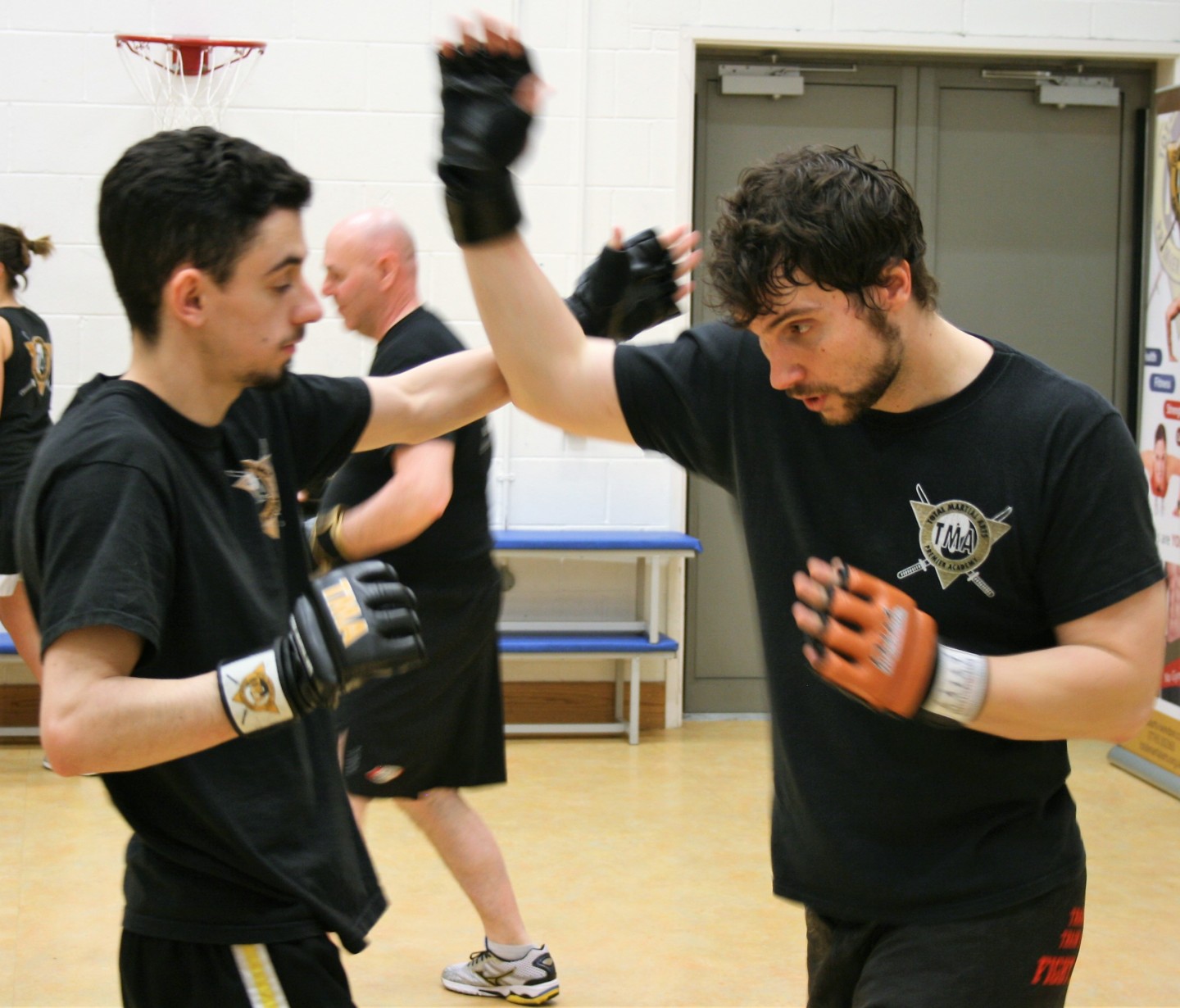
Building Character through Martial Arts Training
Building Character through Martial Arts Training
We hear frequently that sport builds character, however participation alone does not achieve this. Character must be taught. How do you know if you possess character, how can you teach character?
In addition to teaching the physical aspects of martial arts instructors are also responsible for developing character in those they interact with and act as a role model. It’s often possible to tell which instructor or academy students train with by the way they conduct themselves. To teach character, it seems one must first possess character (there is an old aristocratic saying: “to command others first you must learn to command your self”).

Possessing Character
It can be difficult to define what character is, but you undoubtedly know it when you see it. The qualities one expects to find in a person with character would be: Integrity, respect, responsibility, honour, truthfulness, courage, and humility. For me having character means always doing the right thing even in an unfavourable situation, even when there is no reward.
When a person has character it shows even in minor actions. Ask yourself the following questions:
Do I use appropriate language, especially in front of children?
How do I treat women and children?
Am I a positive role model?
Is being right more important than getting the desired result?
Or getting more specific
… Do you show up in smelly, unwashed training kit?
… Do you put your training equipment away afterwards?
…Do you try to hurt your partner when sparring?
These are just a few thoughts, but consider that character is the example you show to everyone, every session, every minute.
Developing Character
We believe that martial arts training provides the environment to both test and develop character. A degree of hardship creates the desired environment perfectly because it’s easy to do the right thing in an easy situation. Hardship helps develop respect, humility and empathy – qualities that are extremely valuable and difficult to acquire. Character is much more than a list of behaviours, it’s not a way of acting, it’s a way of being. At Total Martial Arts Swindon we aim to provide a challenging environment and set a good example, therefore we develop character in our students.